
Uyuni, Bolivia
Where the sky reflects the earth — the world's largest salt flat, surreal high-altitude lagoons, and endless horizons on Bolivia's Altiplano.
The Mirror of the World.
Uyuni is one of South America's most extraordinary natural wonders and an unmissable destination for travelers exploring Bolivia. Situated in the southwestern Altiplano at over 3,600 meters above sea level, it is world-famous for the vast Salar de Uyuni — the largest salt flat on Earth.
Spanning over 10,000 square kilometers, this brilliant white expanse transforms into a giant natural mirror during the rainy season, reflecting the sky in a breathtaking optical illusion. Beyond the salt crust, the surrounding region unfolds into a high-altitude wilderness of vibrant mineral lakes, steaming geysers, towering volcanoes, and endemic wildlife.
Serving as the gateway to the Eduardo Avaroa Andean Fauna National Reserve and the desert routes toward Chile, Uyuni is the ultimate starting point for one of the world's most spectacular road trips.
Born from prehistoric giant lakes
Tens of thousands of years ago, the region was covered by massive prehistoric inland seas, including Lake Minchin and Lake Tauca. As these ancient lakes evaporated under the intense high-altitude sun, they left behind thick layers of salt and mineral-rich brine, creating the vast salt desert seen today.
During the late 19th and early 20th centuries, Uyuni grew into a vital railway hub connecting Bolivia's mineral mines to Pacific ports. The leftover steam locomotives from that industrial boom now rest at the famous Train Cemetery just outside town.
Today, the Salar is not only a legendary travel destination and sacred region for the indigenous Aymara people, but it also holds over half of the world's known lithium reserves beneath its white crust.
High on the Bolivian Altiplano
Uyuni is located in the Potosí Department of southwestern Bolivia, near the borders with Chile and Argentina. Perched on the windswept Andean plateau, the region is characterized by extreme high altitude, crisp air, vibrant cobalt skies, and dramatic volcanic landforms that create a landscape like nowhere else on Earth.
What awaits across the salt plains
Endless white horizons, cactus islands, historic train graveyards, and vibrant lagoons — Uyuni at its essential.
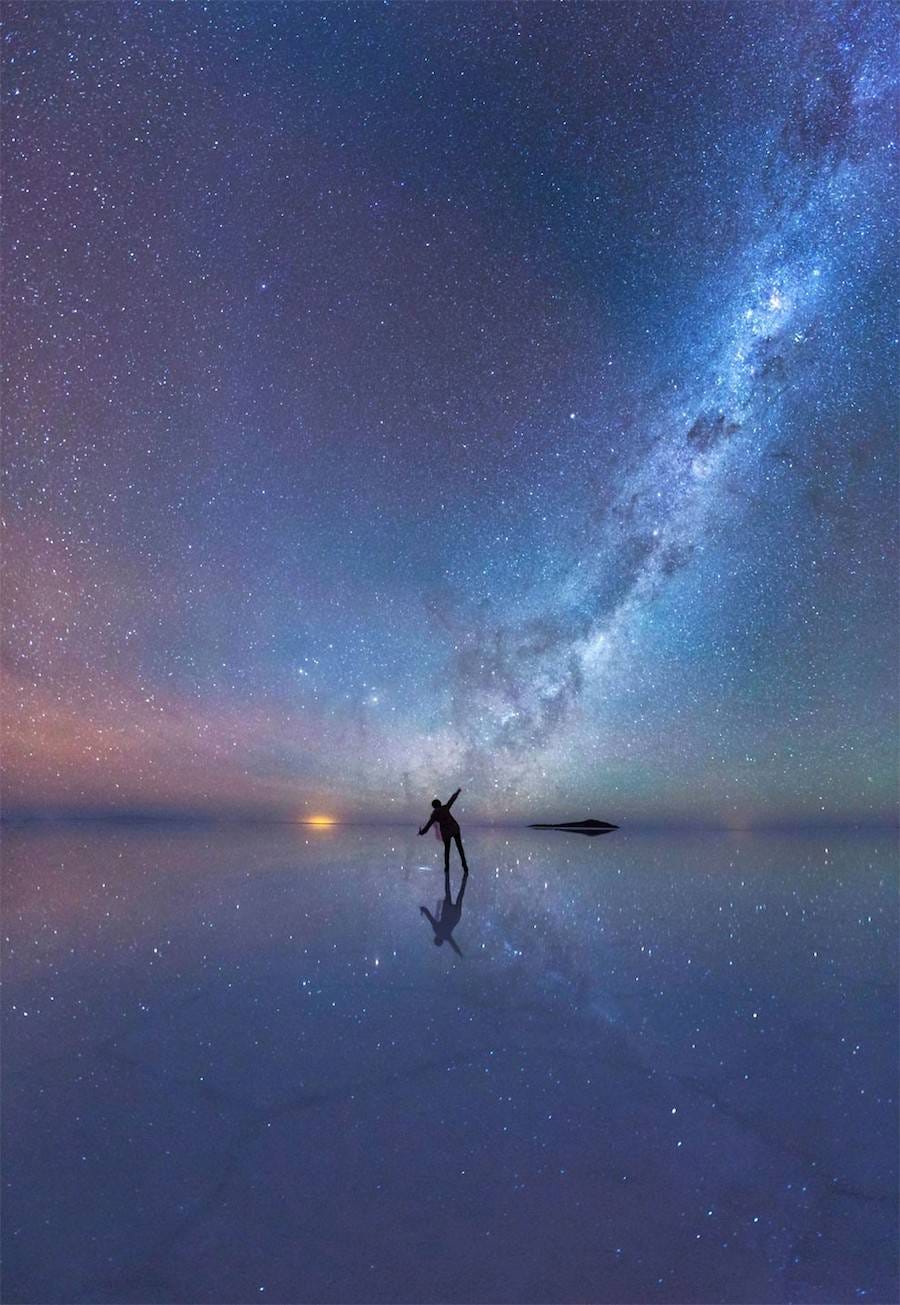
Salar de Uyuni
The vast Salar de Uyuni is the ultimate highlight of the trip. During the dry season (May to November), its bright white polygonal salt crust stretches endlessly beneath deep blue skies.
During the rainy season (December to April), a thin layer of water covers the salt, turning the landscape into the world's largest natural mirror and creating unforgettable visual reflections.
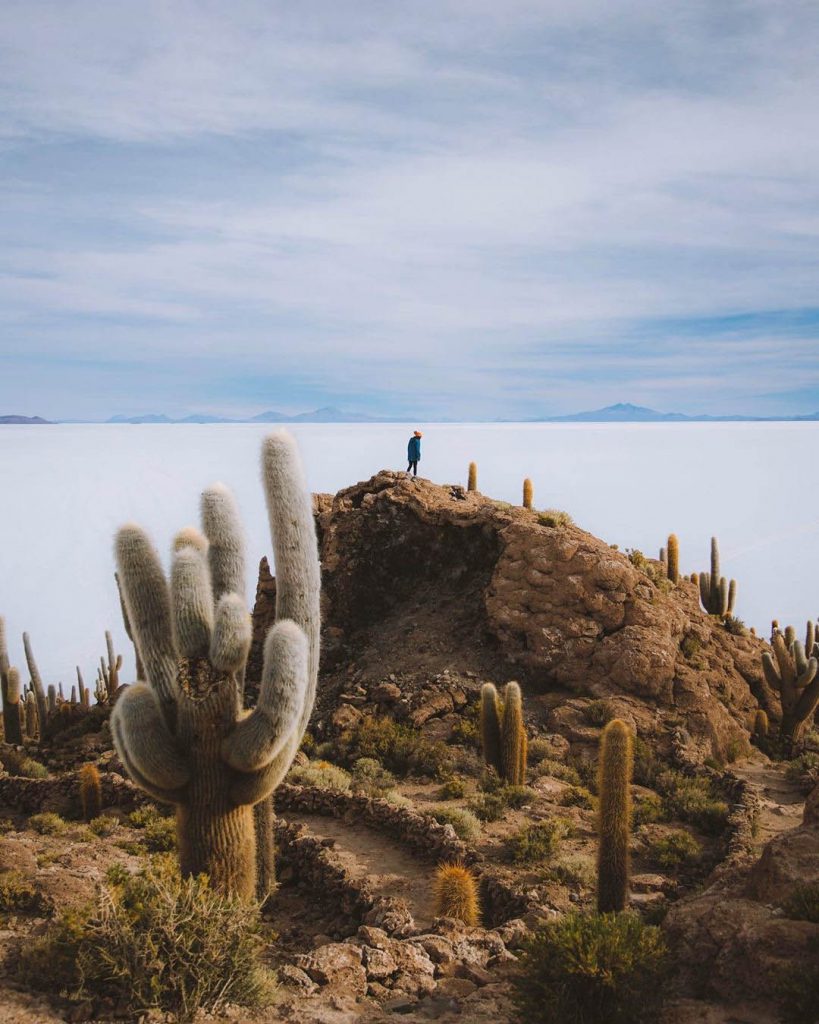
Incahuasi Island
Rising out of the center of the white salt sea, Incahuasi Island is a hilly outcrop formed from ancient coral reef and petrified lava, covered in hundreds of giant cacti (*Trichocereus pasacana*).
A short trail leads to the summit, providing a 360-degree panoramic view across the vast, uninterrupted expanse of white salt surrounding it.
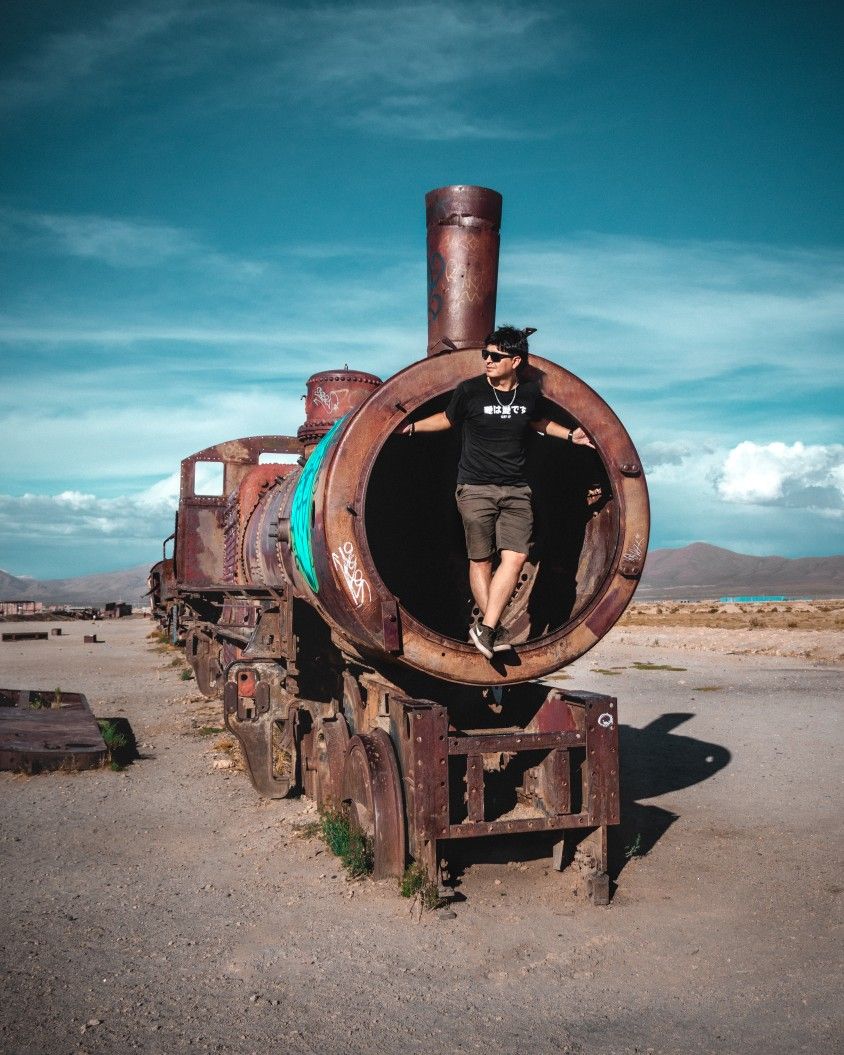
The Train Cemetery
Located just outside the town of Uyuni, the Train Cemetery (*Cementerio de Trenes*) is an open-air graveyard of rusted 19th-century steam locomotives and train cars.
Abandoned when the local mining industry declined, these weathered iron structures create a hauntingly photogenic contrast against the stark high-desert backdrop.
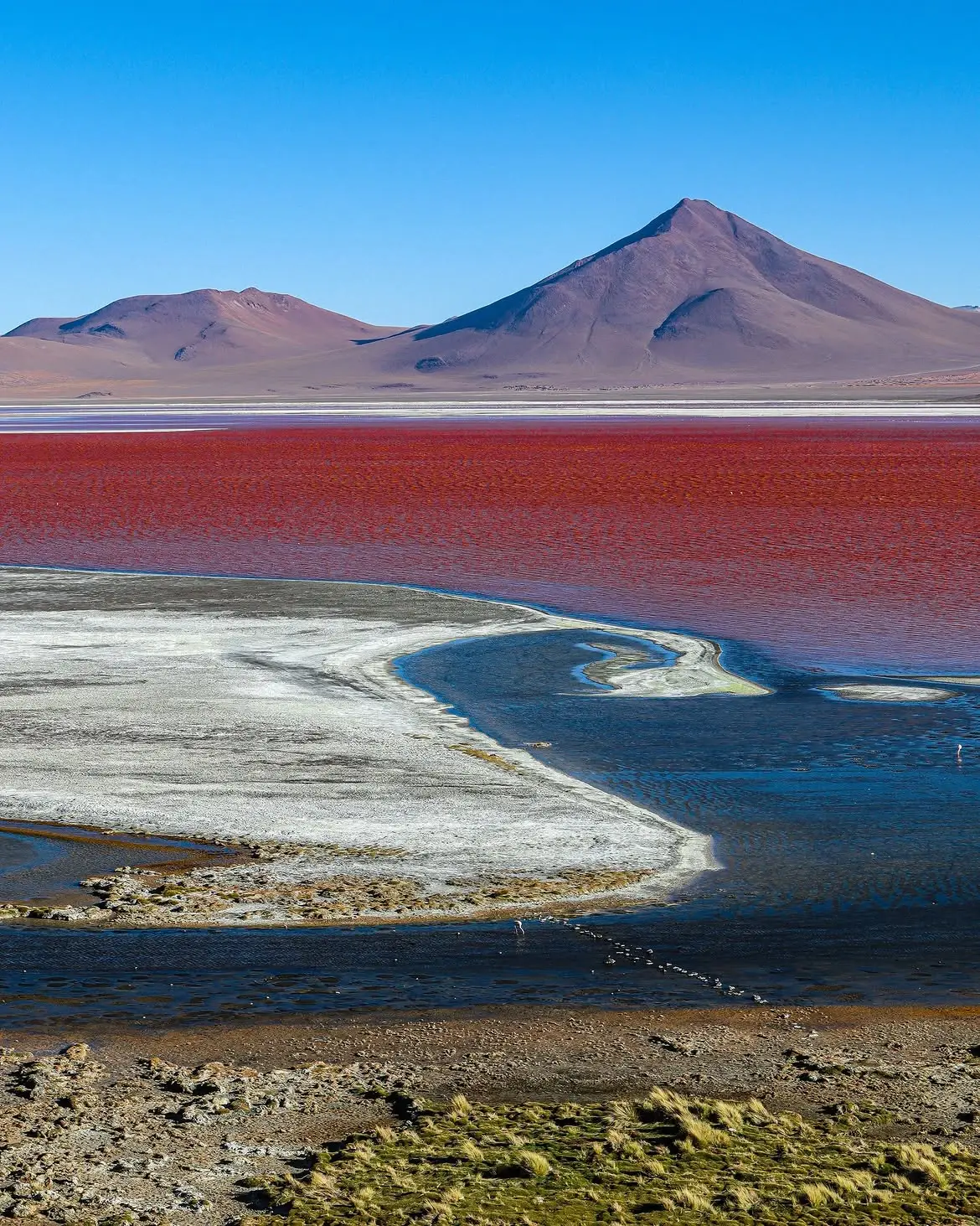
Eduardo Avaroa Reserve
Stretching south of the salt flat, this protected reserve features hyper-surreal mountain landscapes, including the famous Laguna Colorada — a shallow, striking red-tinted salt lake.
The lake's reddish color comes from microscopic algae and sediments, creating a critical feeding habitat for thousands of rare James's, Andean, and Chilean flamingos.
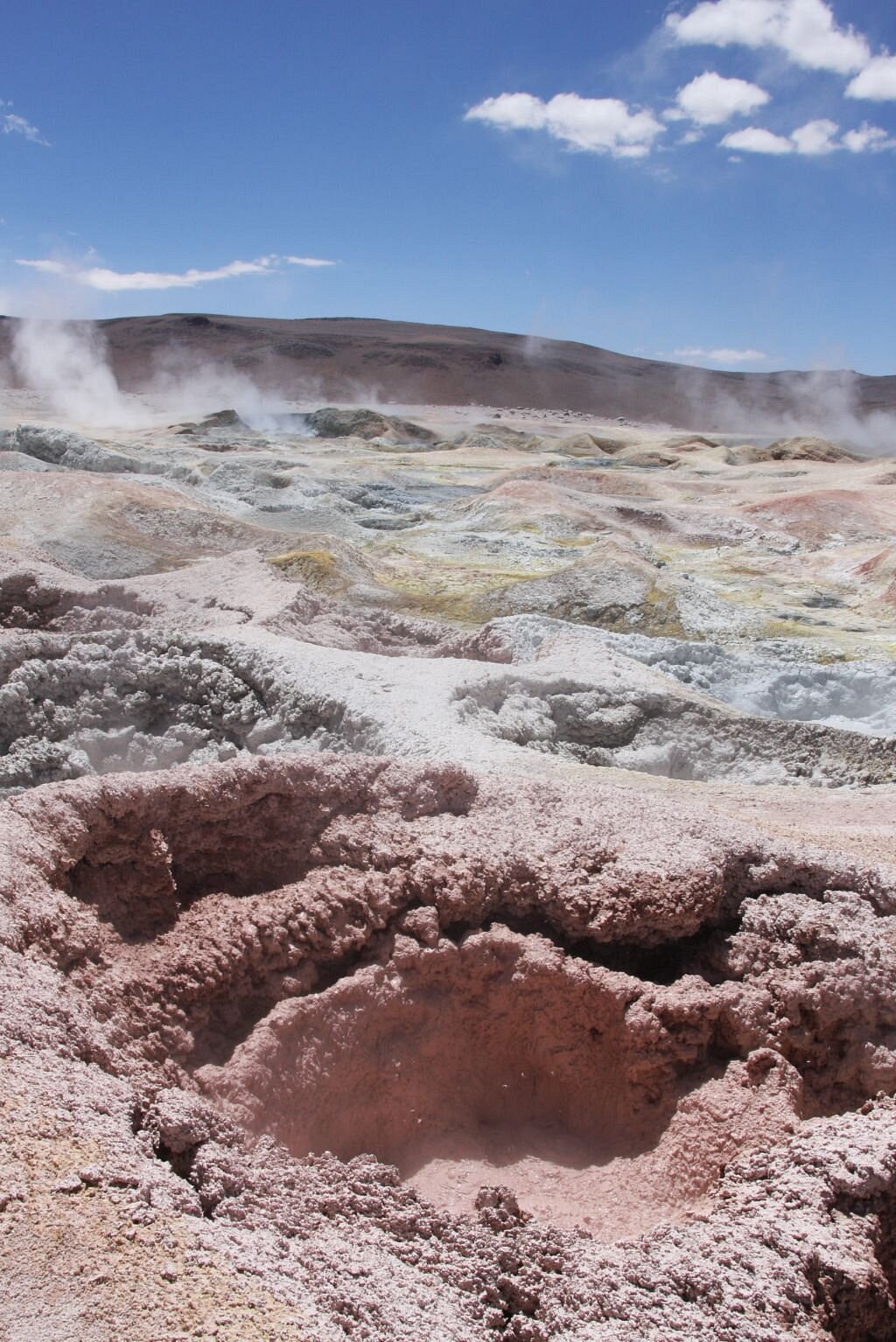
Sol de Mañana
Situated at nearly 4,900 meters above sea level, Sol de Mañana is an intense geothermal area filled with bubbling mud pits, roaring steam fumaroles, and sulfur vents.
Nearby, travelers can relax in the natural thermal waters of Polques, soaking in warm mineral pools while taking in views of the freezing Altiplano landscape.
Further essentials
Volcanic peaks, salt architecture, artisan villages, and surreal desert landscapes.
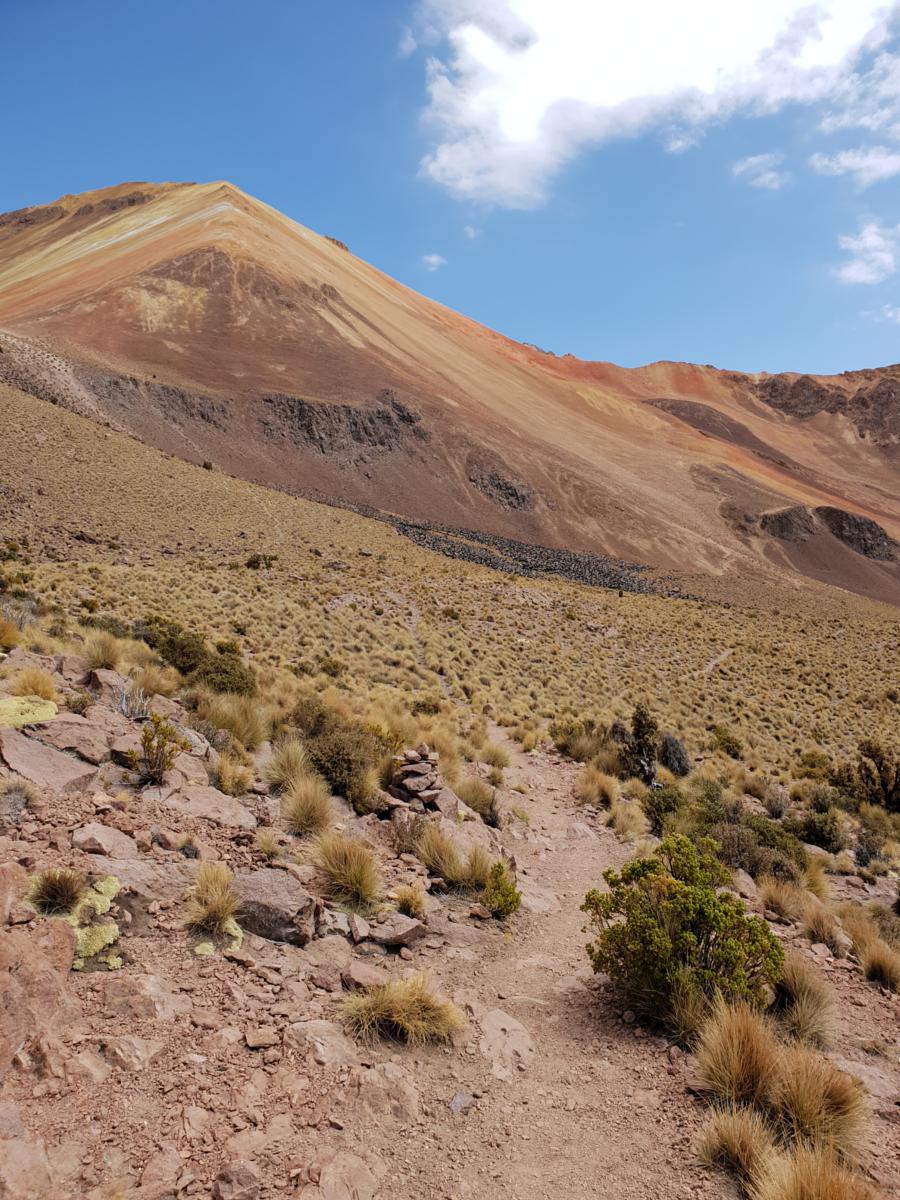
Tunupa Volcano
Looming over the northern edge of the salt flat, Tunupa Volcano offers colorful volcanic slopes and ancient caves near Coquesa containing centuries-old preserved pre-Inca mummies.
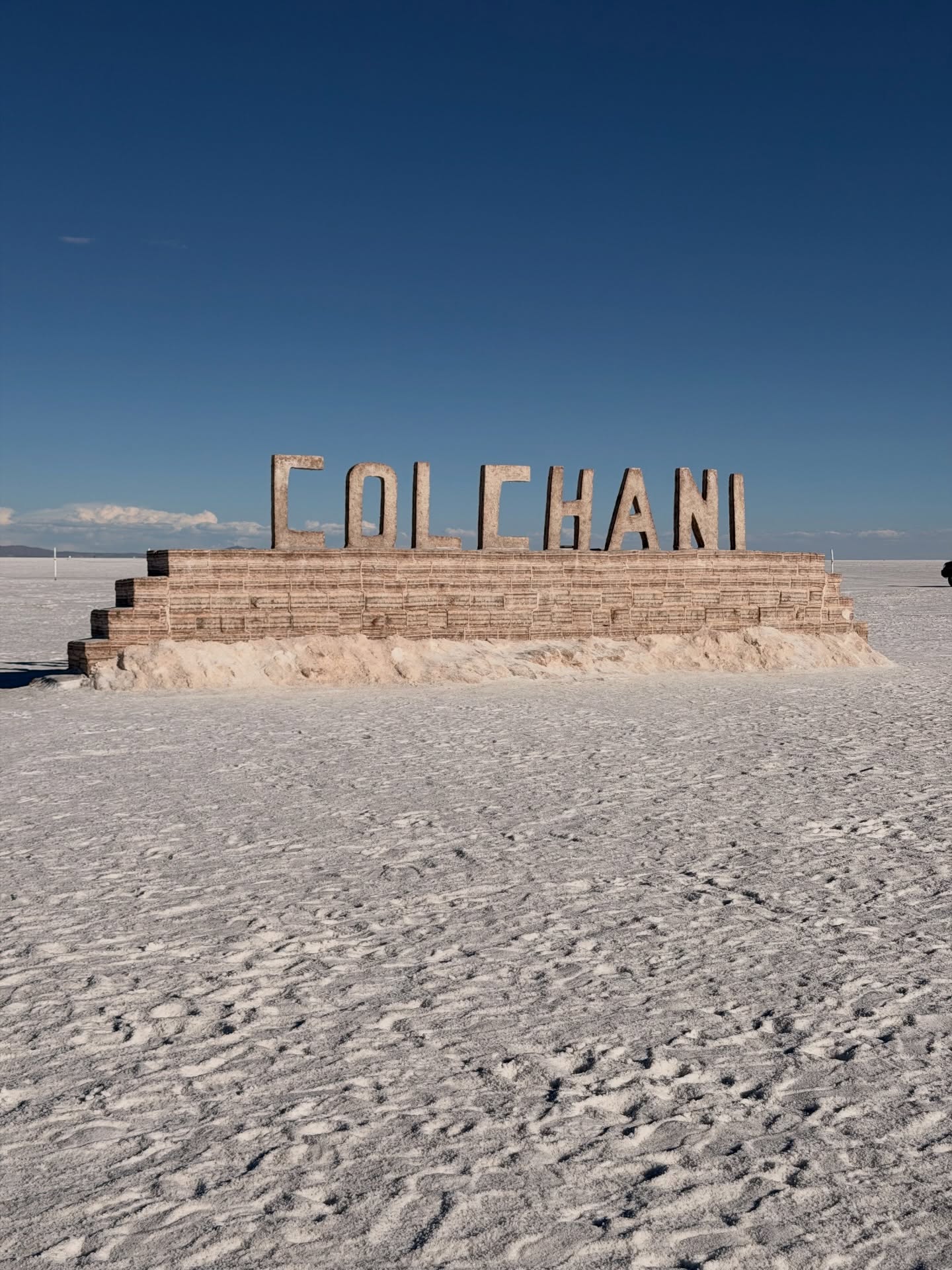
Colchani Village
The main entrance point to the Salar, where local families process salt using traditional methods. It is also the best place to buy artisanal salt crafts and woven llama wool goods.
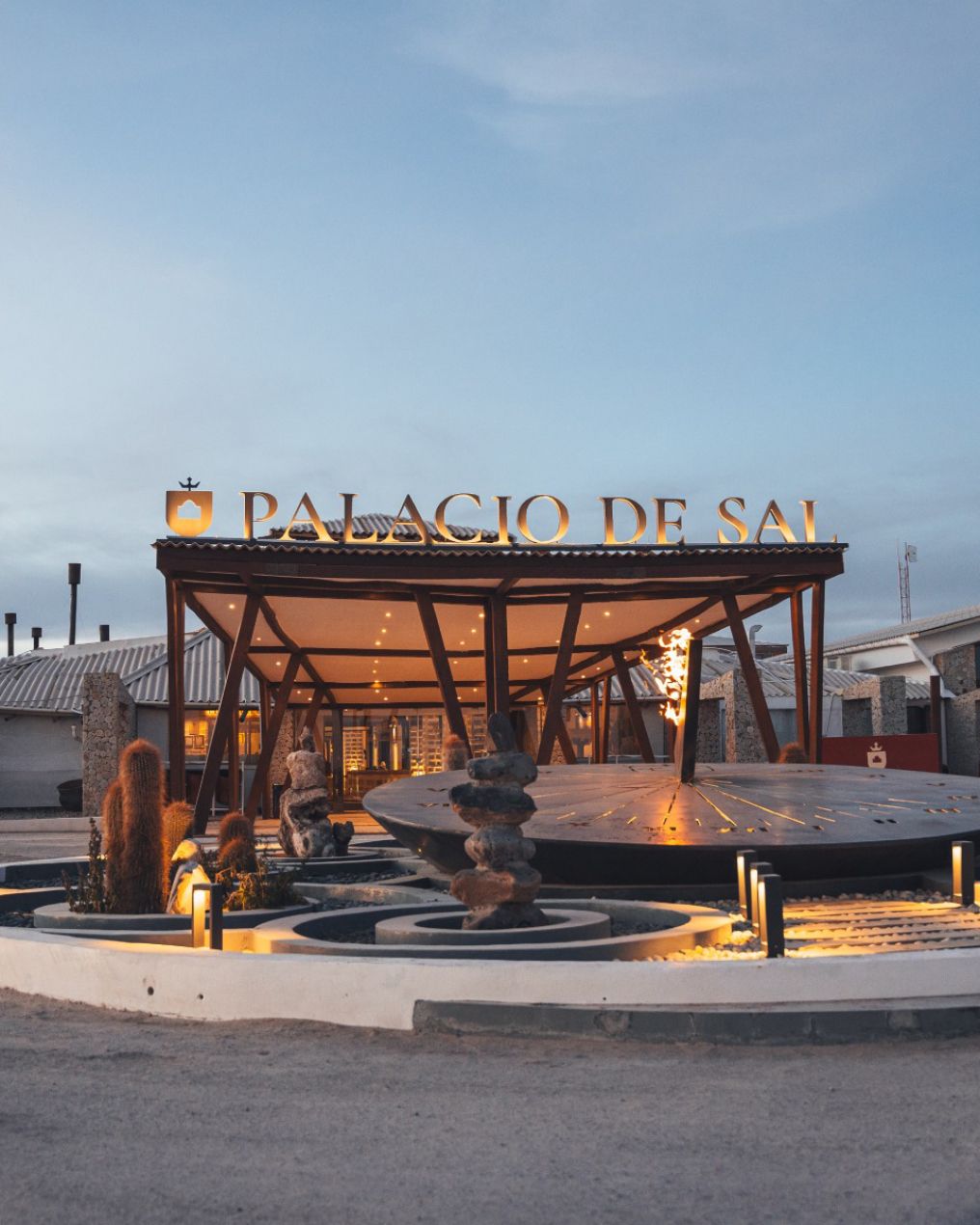
Iconic Salt Hotels
Unique eco-lodges constructed almost entirely from salt blocks harvested directly from the flat — including walls, tables, beds, and furniture — offering a one-of-a-kind accommodation experience.
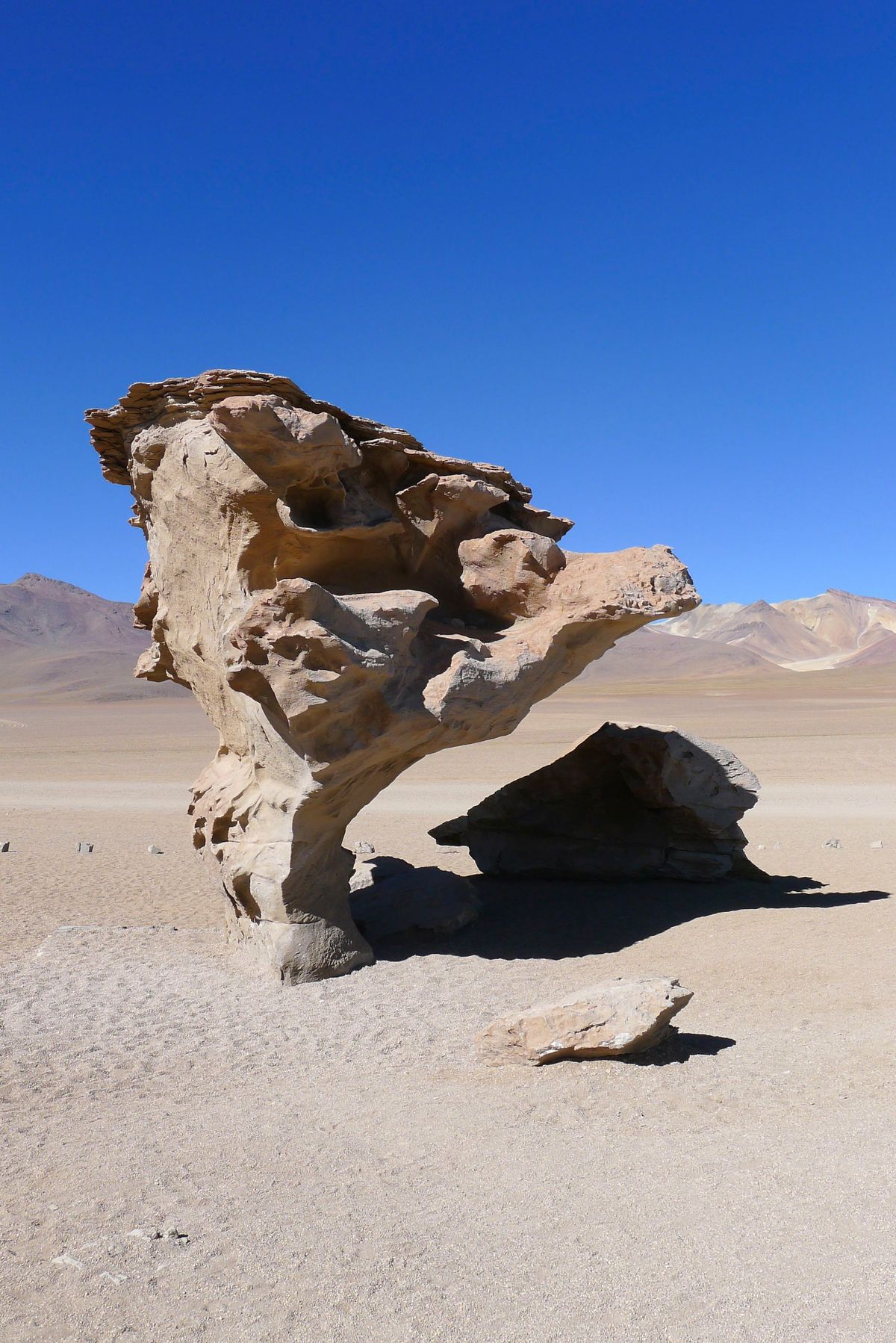
Dalí Desert
A barren high-altitude desert characterized by isolated rock formations scattered across wind-swept sand dunes, evoking the surrealist paintings of Salvador Dalí.
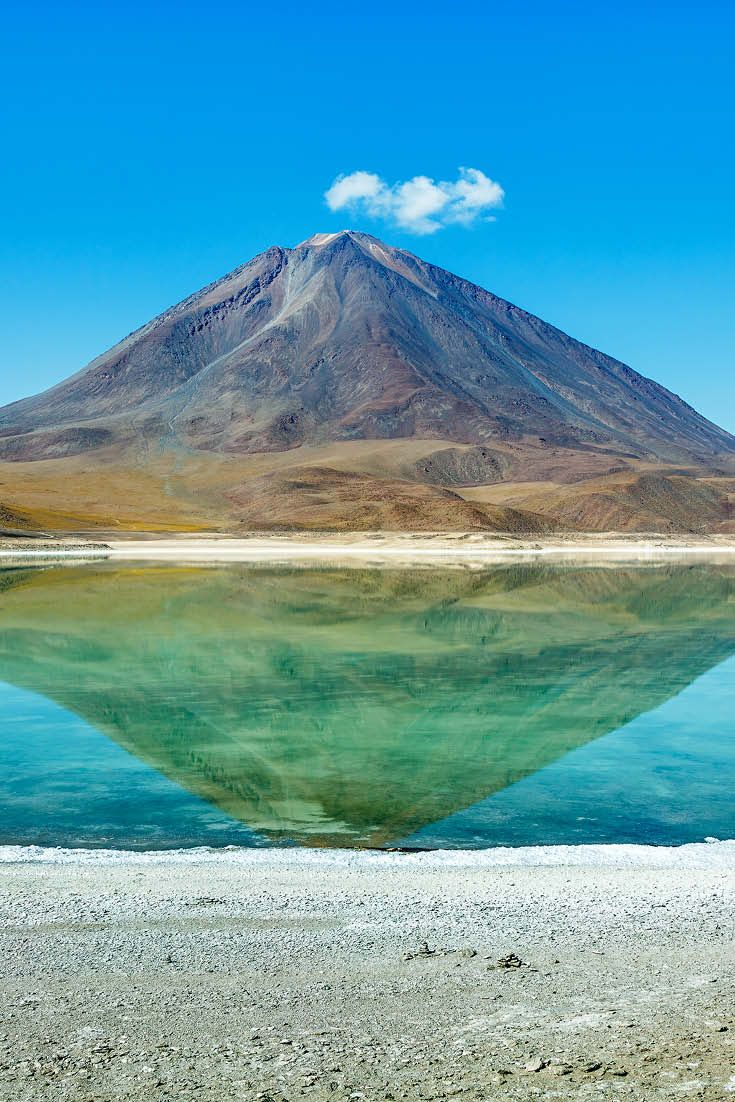
Laguna Verde
A striking turquoise-green salt lake situated at the base of the majestic Licancabur Volcano near the Chilean border, colored by copper and arsenic mineral deposits.
Is Uyuni worth visiting?
Uyuni is a destination unlike anywhere else on Earth. Combining the vastness of the world's largest salt flat, surreal mirror reflections, vibrant high-altitude lagoons, active geothermal vents, and unique wildlife, it delivers an unforgettable journey across Bolivia's Altiplano.
Whether you visit during the dry season to witness the crisp salt geometric patterns or during the wet season to walk across the endless sky reflected under your feet, Uyuni stands out as a true bucket-list experience in South America.

Andean Peru
Machu Picchu, Nazca Lines, Colca Canyon, Cusco and the Sacred Valley.
Discover Route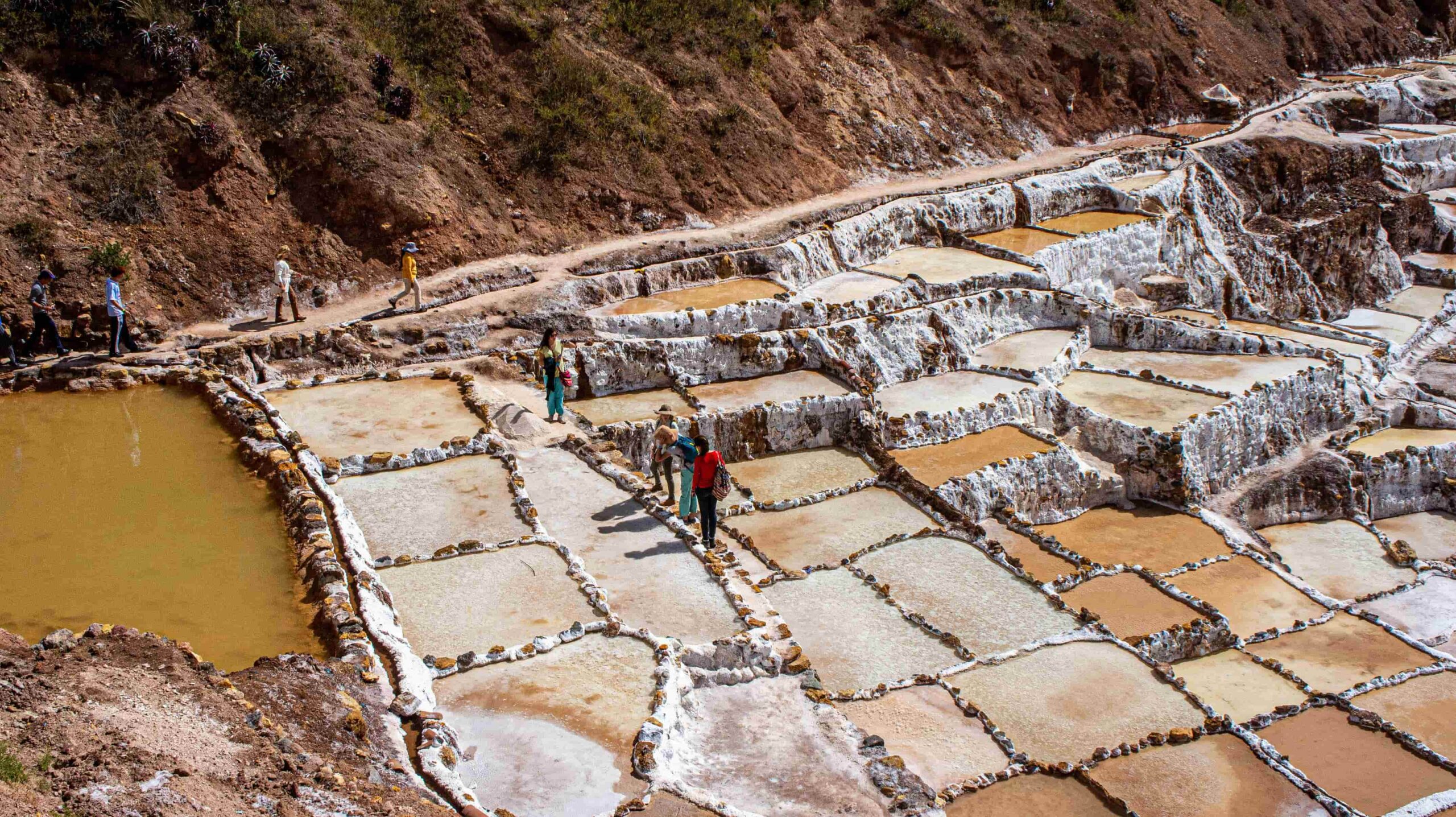
Majestic Peru
Machu Picchu, Huacachina Oasis, Cusco and the waters of Lake Titicaca.
Discover Route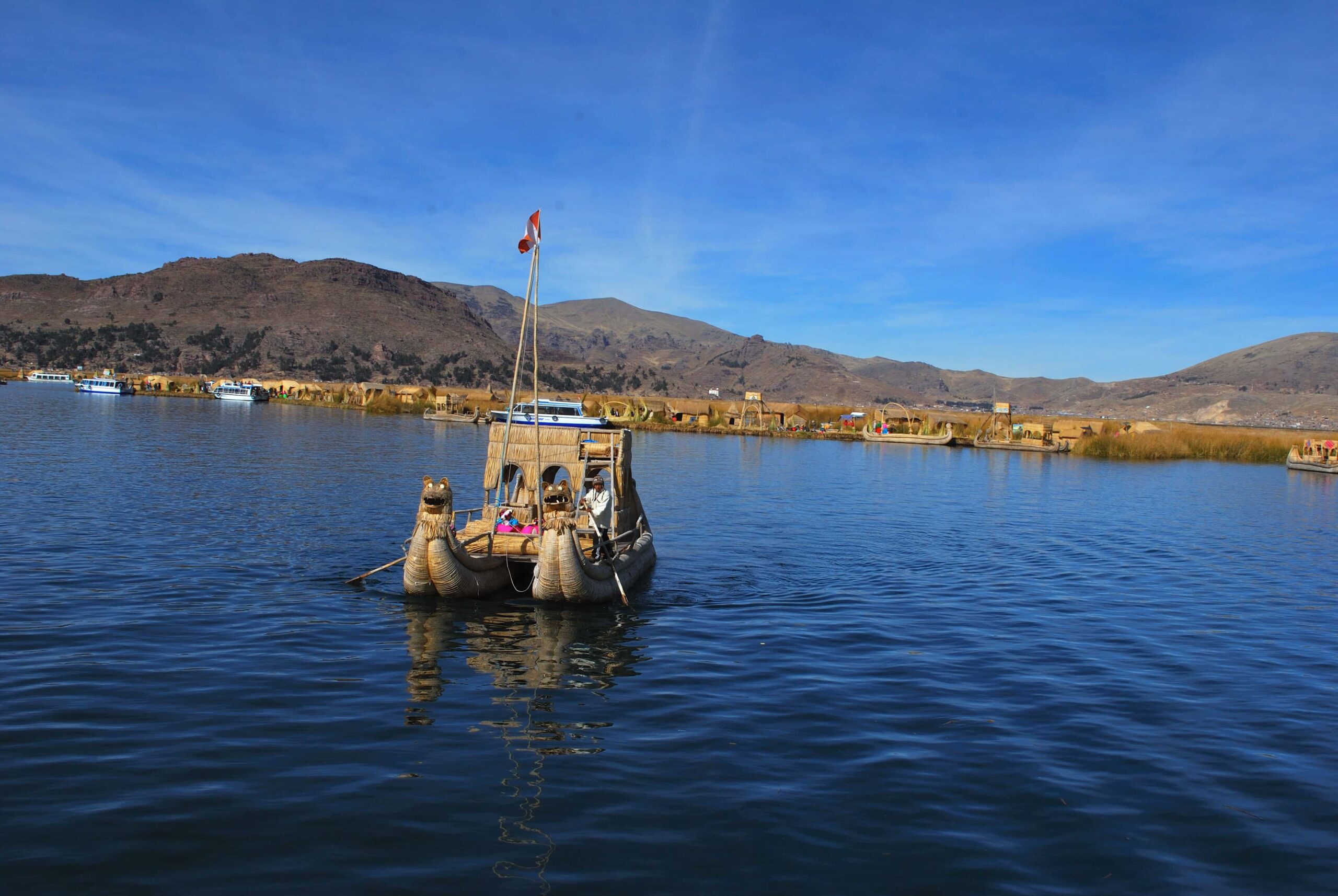
Peruvian Journey
A deep dive through Machu Picchu, Cusco and Lake Titicaca.
Discover Route