
Lake Titicaca · Bolivia Side
The birthplace of the Inca legend — sacred islands, colonial pilgrimage churches and the deep blue waters where the Sun god is said to have risen.
The other shore of a sacred lake.
Lake Titicaca is shared between Peru and Bolivia, and each side offers a distinct experience of this legendary Andean water. The Bolivian shore, centered on the town of Copacabana and the sacred Isla del Sol, is where the ancient Andean world places one of its most powerful origin stories — the emergence of Manco Cápac and Mama Ocllo, founders of the Inca Empire.
Traveling to the Bolivian side means crossing into a landscape defined by silence, altitude and legend. The islands of the Sun and the Moon still hold pre-Inca terraces, temples and stone paths that have witnessed centuries of pilgrimage. Copacabana itself is a colonial lakeside town anchored by one of the most important religious sanctuaries in South America.
For travelers already exploring Peru, the Bolivian shore of Titicaca is one of the most rewarding extensions of a southern Andean journey — reachable directly from Puno by an overland border crossing.
Where the Incas were born
According to Inca tradition, Lake Titicaca was the place where the Sun god sent Manco Cápac and Mama Ocllo to civilize the Andean peoples. The Isla del Sol, on the Bolivian side of the lake, is considered the exact place of that mythical emergence — making the Bolivian shore one of the most sacred landscapes in the Andean world.
Long before the Incas, this region was home to the Tiwanaku civilization, one of the most influential cultures of pre-Columbian South America. Their influence shaped the ceremonial spaces, terraces and religious sites still visible on the islands today.
After the Spanish conquest, Copacabana became one of the most important pilgrimage centers in the continent thanks to the Virgin of Copacabana — the patron saint of Bolivia. Even today, Aymara traditions, Catholic rituals and pre-Inca beliefs coexist along the Bolivian shore.
On the Bolivian shore of Titicaca
The Bolivian side of Lake Titicaca sits at approximately 3,812 meters above sea level, on the western edge of Bolivia. The town of Copacabana is the natural base for exploring the lake, its islands and its surroundings. From here, boat crossings depart daily to the Isla del Sol and Isla de la Luna — the two most sacred islands in Andean mythology.
Two seasons, two experiences
The Bolivian side of Titicaca can be visited year-round. Because of the altitude, days are typically sunny while nights can be cold in any season — layered clothing is essential.
The best time to visit. Clear skies, calm waters and excellent conditions for boat trips, island hikes and photography.
Rainfall is more frequent and the landscapes turn intensely green. Boat crossings still operate, but weather can be less predictable.
What awaits on the Bolivian shore
Sacred islands, pilgrimage churches and ancient stone monuments — the essentials of any visit to Bolivian Titicaca.
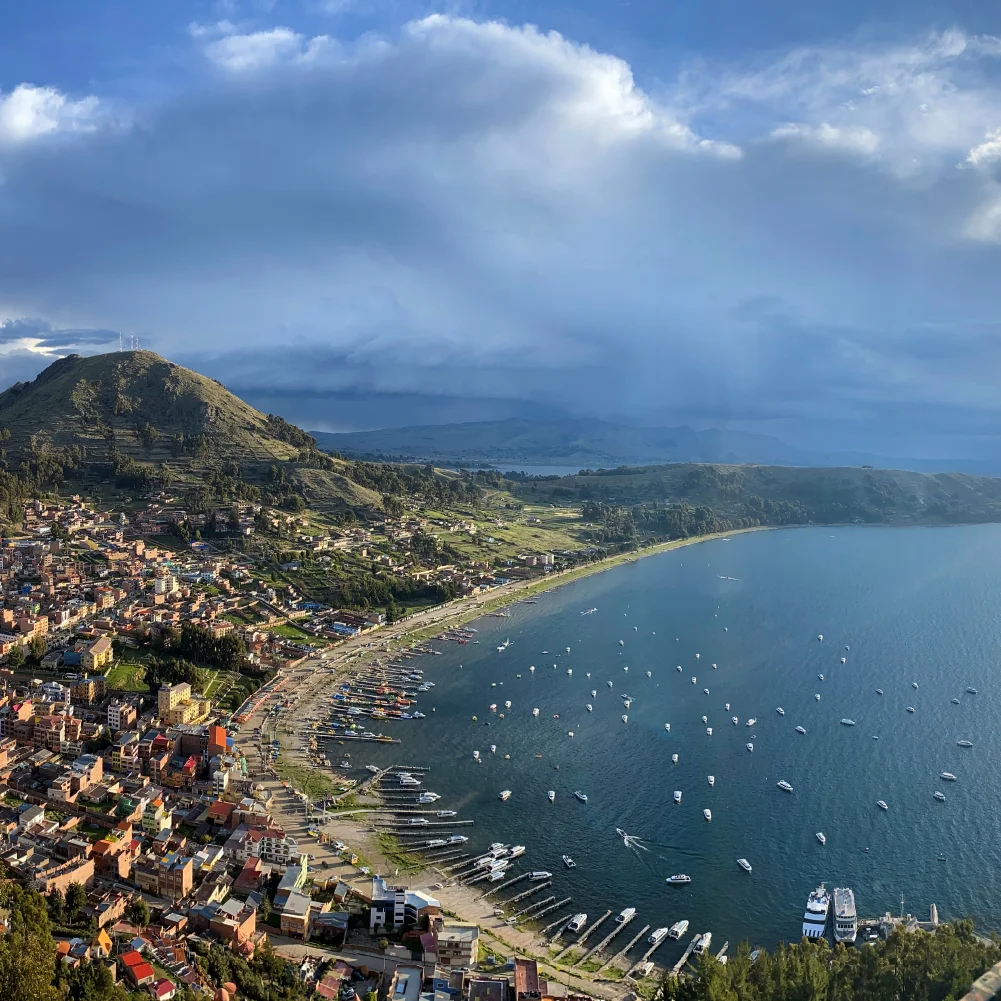
Copacabana
Copacabana is the main town on the Bolivian shore of Lake Titicaca and the base from which most travelers explore the region. Its lakeside setting, colonial streets, artisan markets and viewpoints make it a destination in its own right — not just a stop on the way to the islands.
The town is also one of the most important pilgrimage centers in South America, thanks to the Virgin of Copacabana, patron saint of Bolivia.
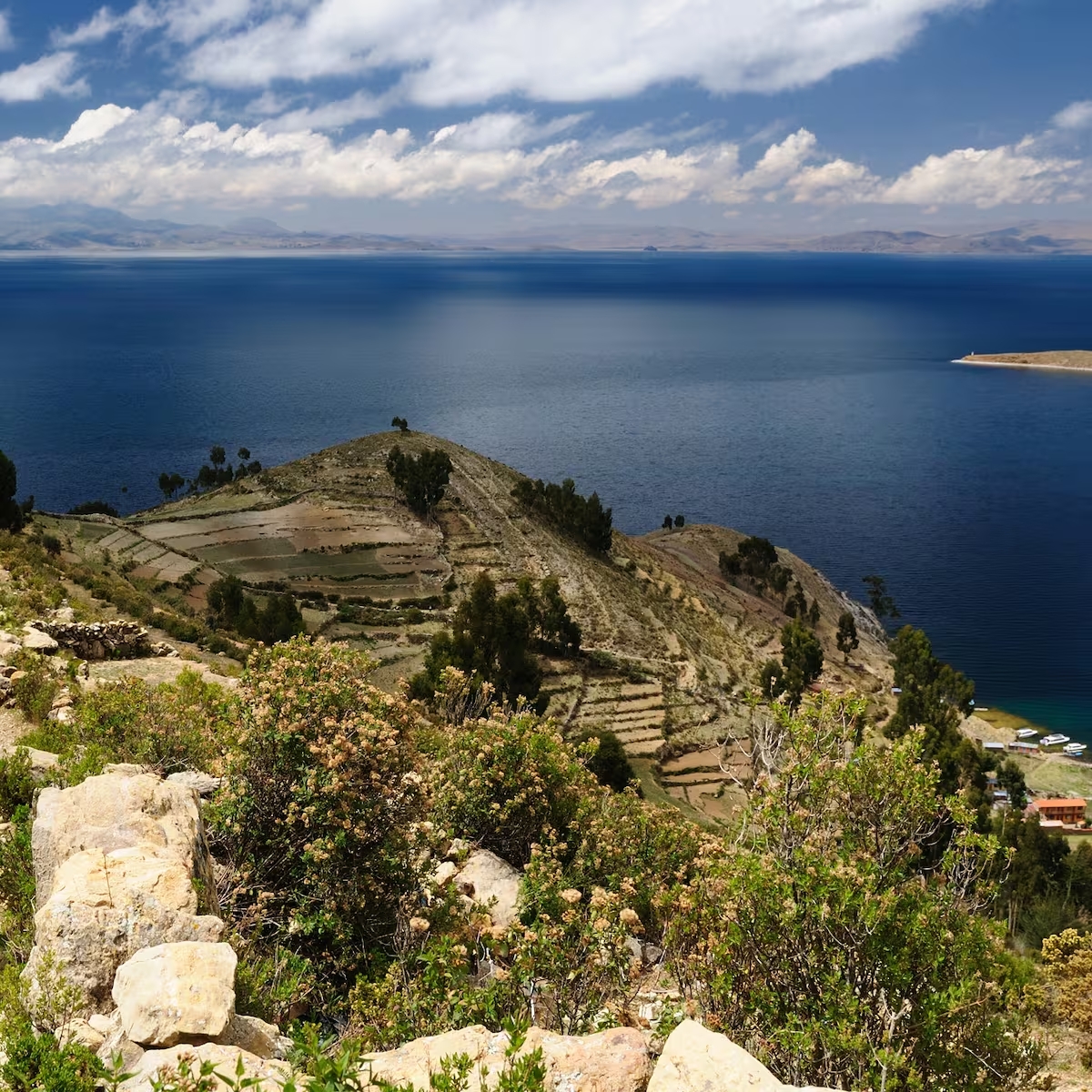
Isla del Sol
The Island of the Sun is the most iconic destination on the Bolivian side of Titicaca. According to Inca tradition, this is where Manco Cápac and Mama Ocllo emerged from the lake to found the Inca Empire, making it one of the most sacred sites in the Andean world.
The island can be explored on foot through ancient stone paths that pass pre-Inca terraces, small Aymara communities and ceremonial ruins, with sweeping views of the lake in every direction.
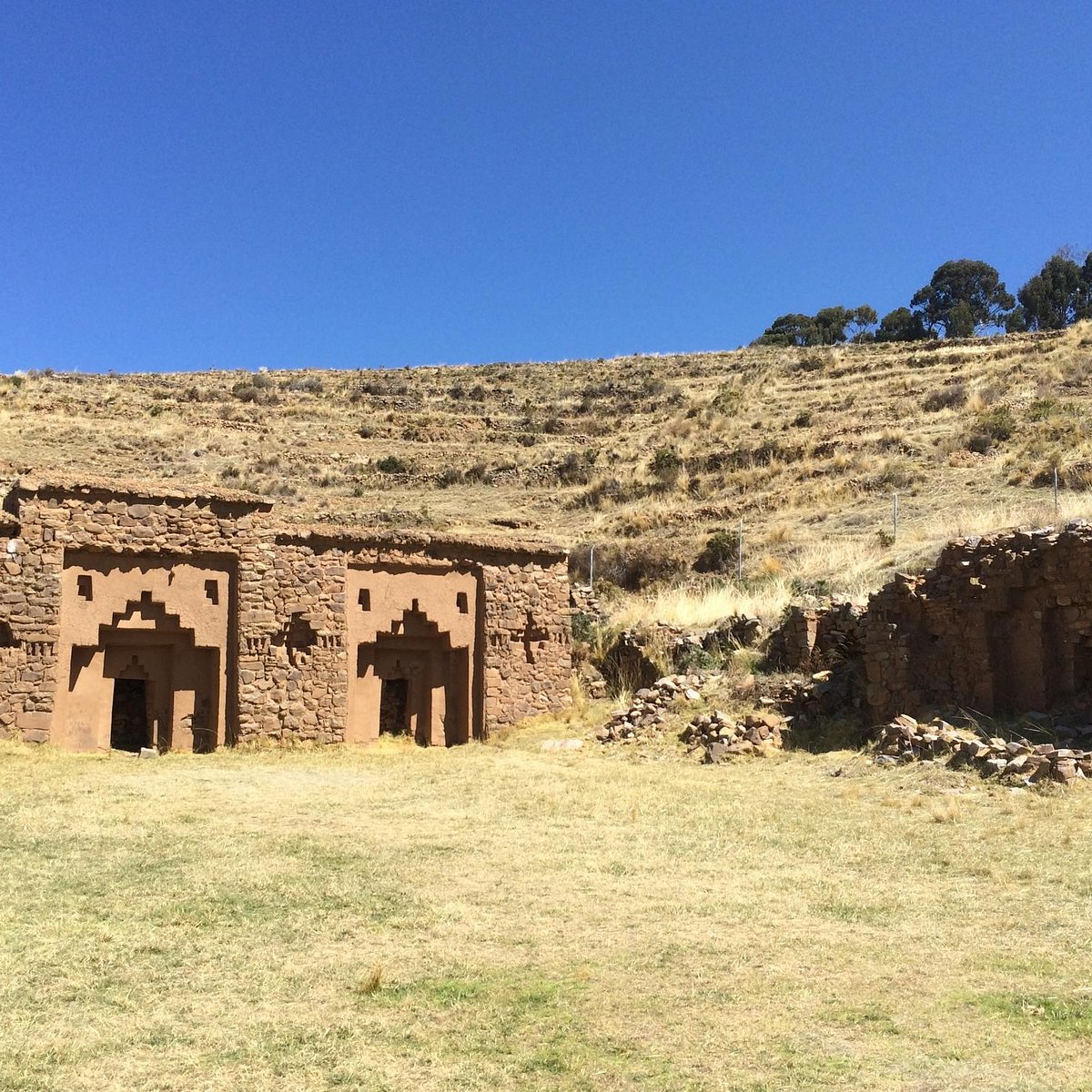
Isla de la Luna
Smaller and quieter than its neighbor, the Island of the Moon holds the ruins of Iñak Uyu — a temple dedicated to the Moon that once housed the chosen women of the Inca Empire. Reaching it involves a shorter boat ride and offers a more intimate encounter with the lake's ceremonial past.
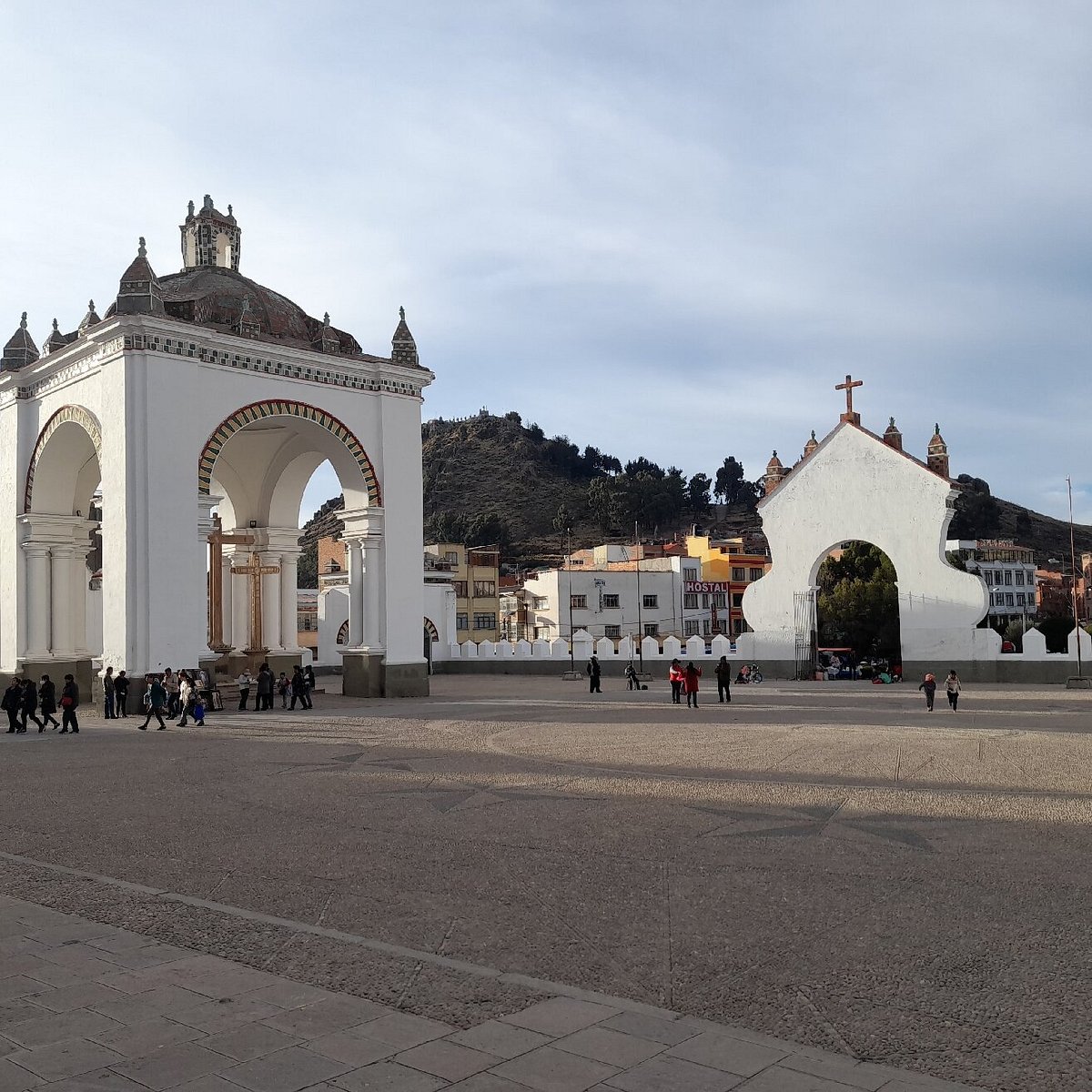
Basilica of Our Lady of Copacabana
The white-walled Basilica of Our Lady of Copacabana is one of the most important religious buildings in Bolivia. Home to the miraculous image of the Virgin of Copacabana, patron saint of the country, it draws pilgrims from across South America — especially during the annual festivals of February and August.
Its Moorish-influenced architecture and its role at the heart of Andean Catholic devotion make it an essential visit.
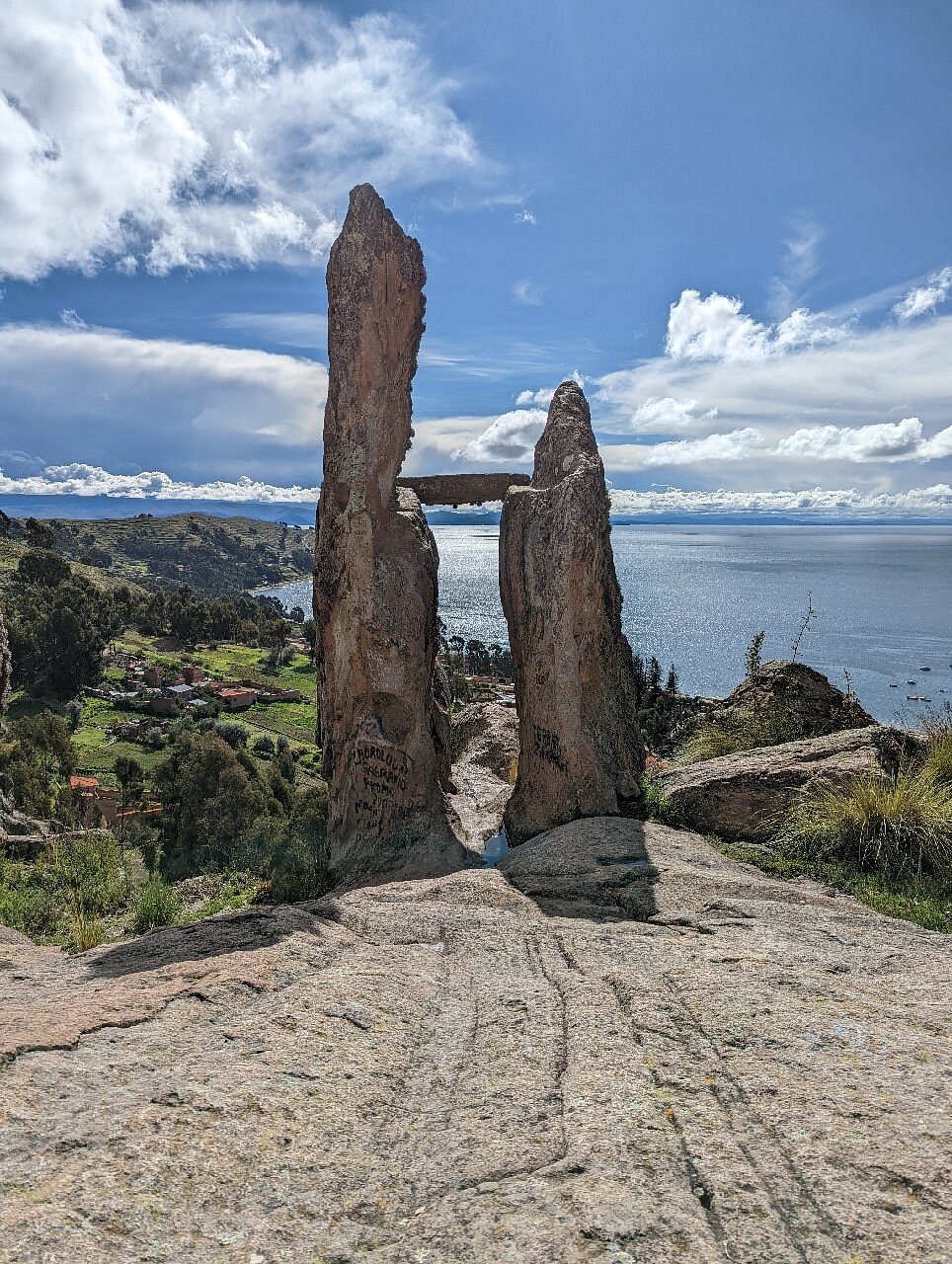
Horca del Inca
Perched on a hill above Copacabana, the Horca del Inca is a pre-Inca astronomical observatory used to track the solstices and the movement of the sun. Despite its misleading Spanish name, it has no colonial gallows history — it is a much older Andean site with sweeping panoramic views of the lake.
Further essentials
Viewpoints, hidden ruins and one of the most memorable border crossings in South America.
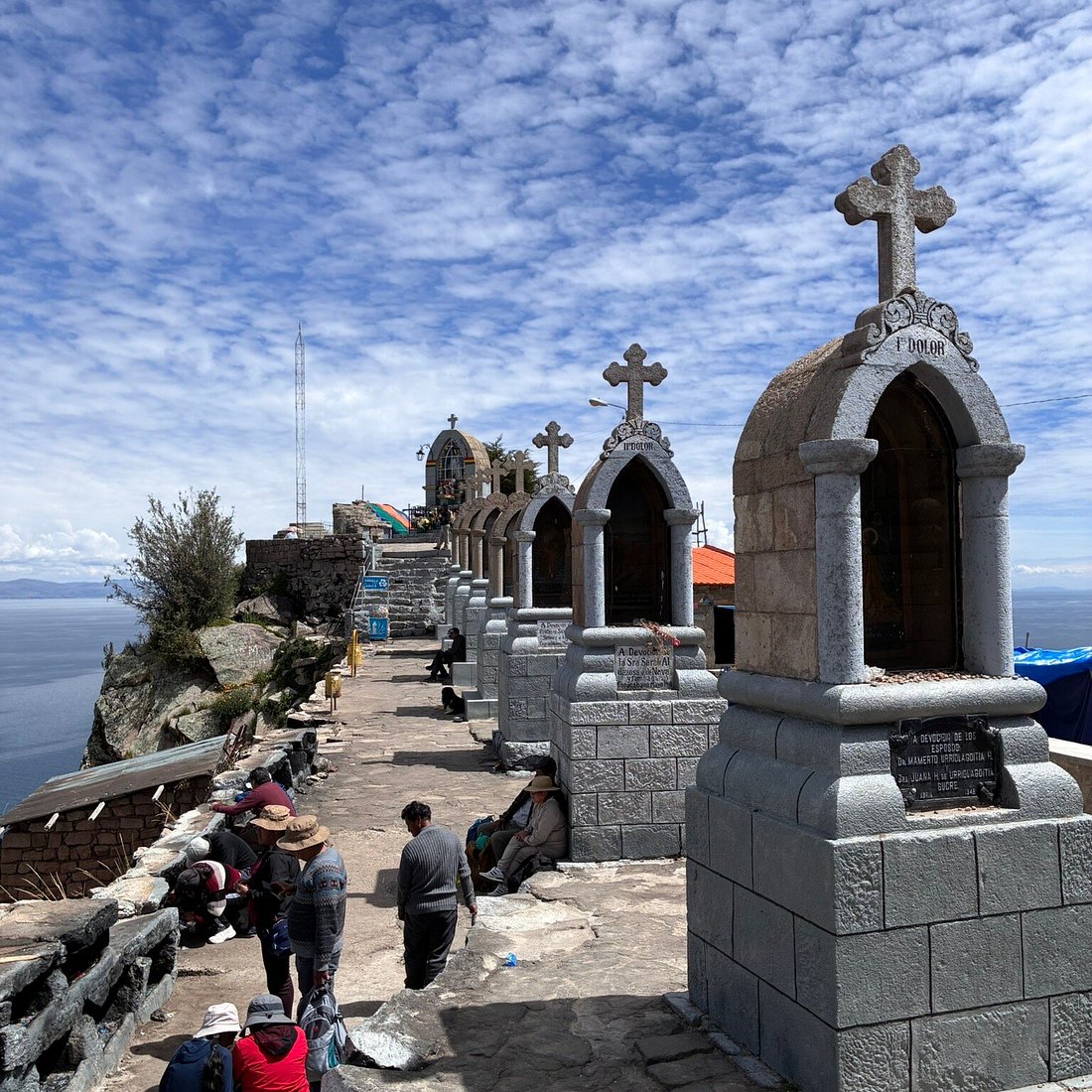
Cerro Calvario
A short but steep climb from Copacabana leads to Cerro Calvario, one of the most spectacular viewpoints on the lake. Reaching the top at sunset is a small pilgrimage in itself, offering wide-angle views of Copacabana and the surrounding waters.
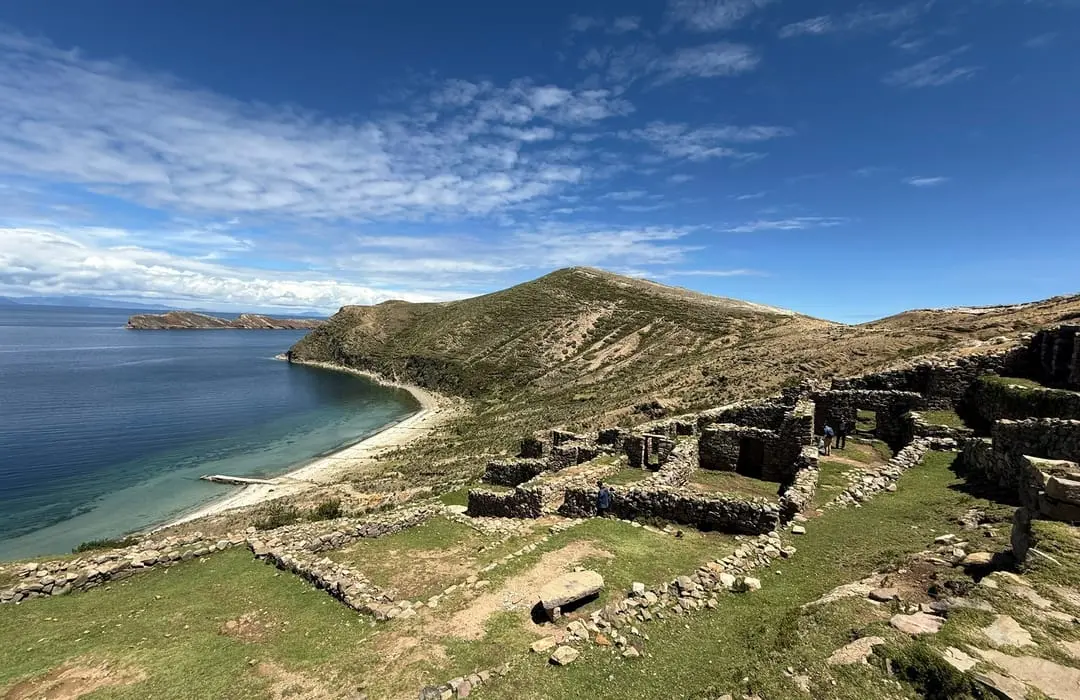
Chincana Ruins
Located on the northern end of Isla del Sol, the Chincana labyrinth is one of the most enigmatic ceremonial complexes on the lake. Nearby lie the Sacred Rock and the ceremonial Table — sites tied to the Andean creation myths.
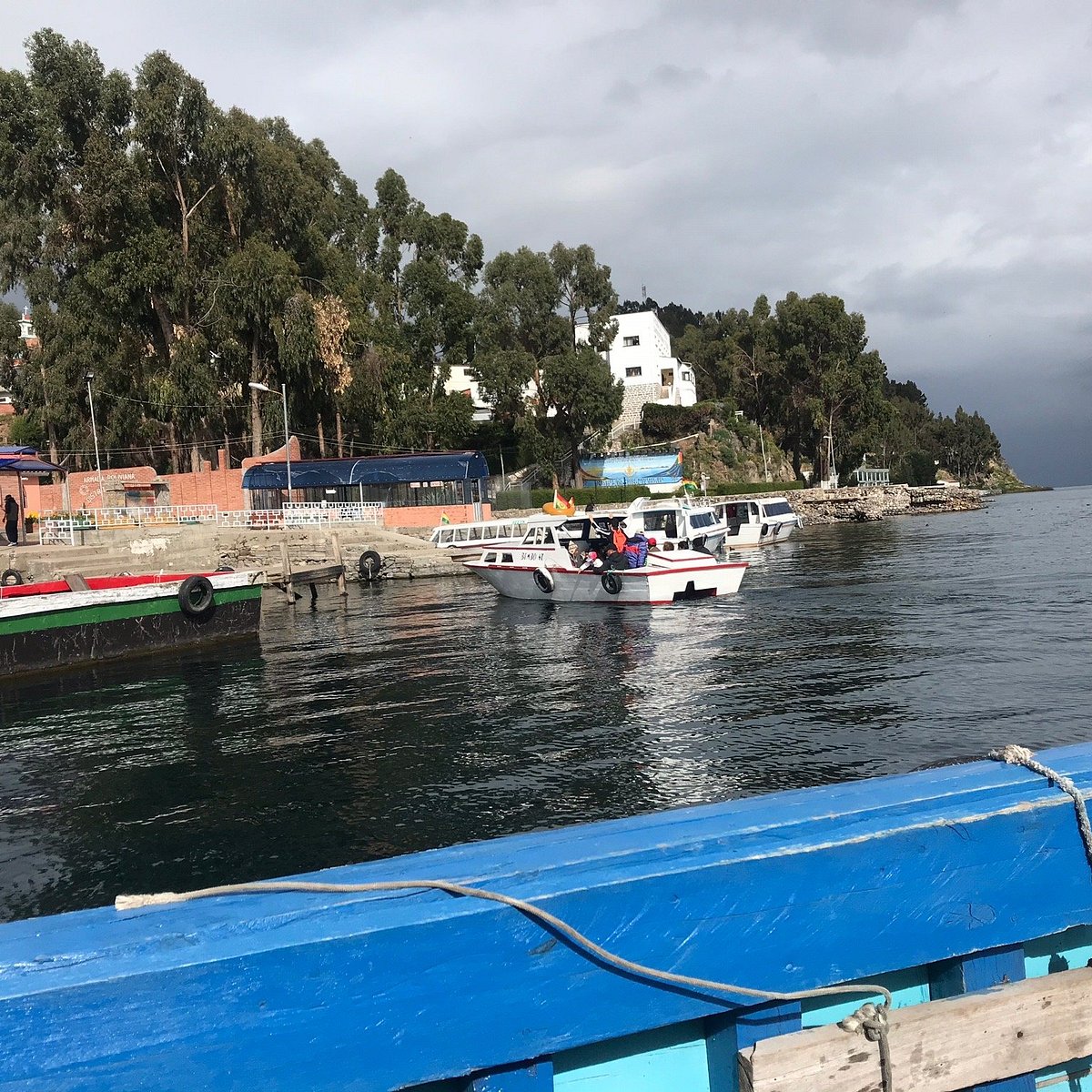
Strait of Tiquina
On the road between La Paz and Copacabana, the Strait of Tiquina is the narrowest crossing of Lake Titicaca — where passengers and vehicles cross separately on wooden barges. A short but memorable moment of the journey.
Crossing from Puno to Copacabana
For travelers already on the Peruvian side of Titicaca, the Bolivian shore is only a few hours away by overland border crossing. Buses depart daily from Puno, cross the border at Kasani-Yunguyo and continue directly to Copacabana — a journey of roughly 3 to 4 hours in total.
This makes the Bolivian shore one of the most natural extensions of any journey through southern Peru: a chance to see both sides of the same sacred lake in a single trip.
Is the Bolivian side worth visiting?
Yes — especially for travelers already exploring Peru. The Bolivian shore of Lake Titicaca offers a completely different atmosphere: quieter towns, sacred islands tied to the origin of the Inca Empire, and a colonial pilgrimage heritage still very much alive.
Crossing into Copacabana and sailing to the Isla del Sol lets you experience the two faces of the same lake — the Peruvian and the Bolivian — in one continuous journey through the highest waters of the Andes.

Andean Peru
Machu Picchu, Nazca Lines, Colca Canyon, Cusco and the Sacred Valley.
Discover Route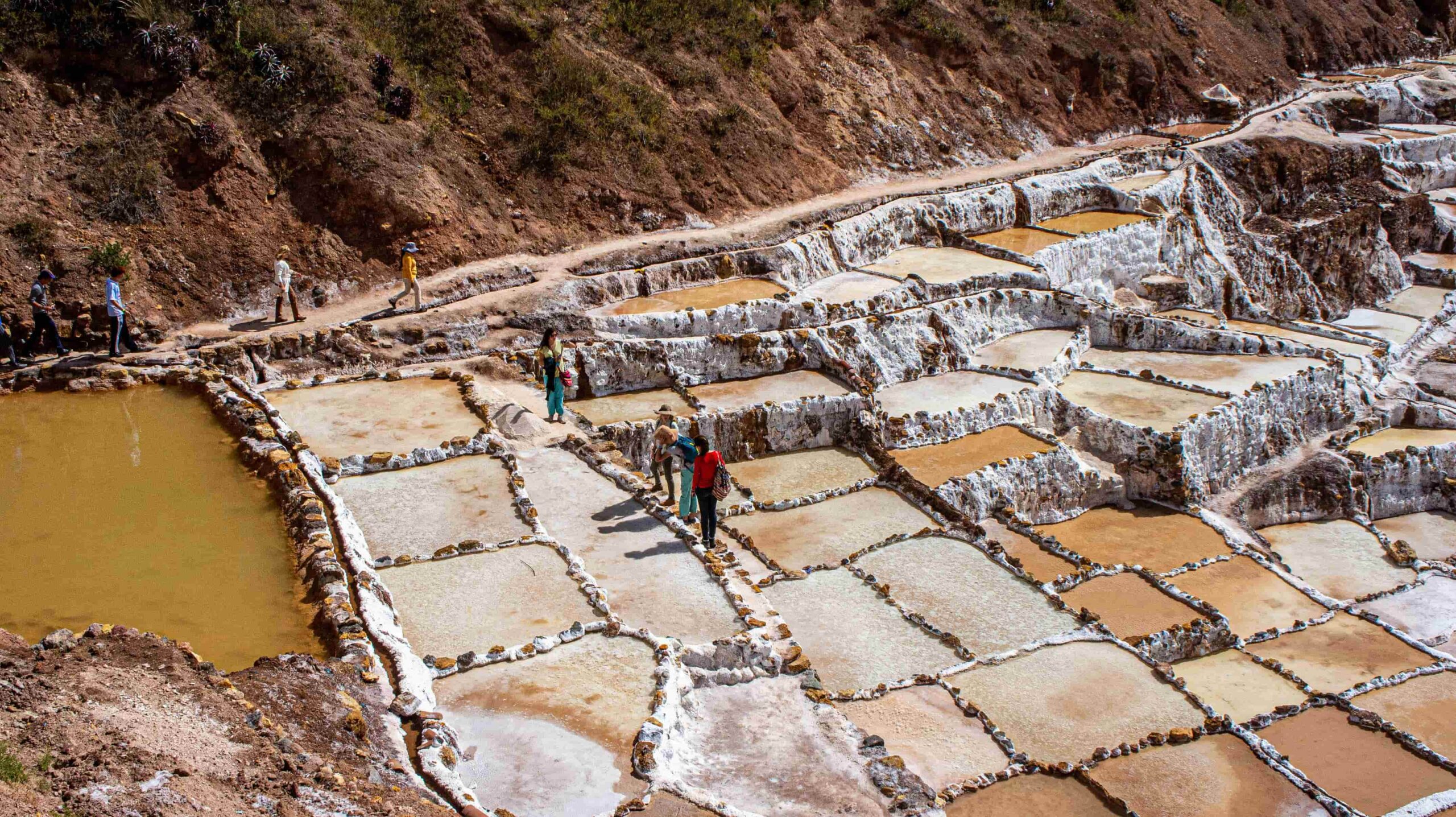
Majestic Peru
Machu Picchu, Huacachina Oasis, Cusco and the waters of Lake Titicaca.
Discover Route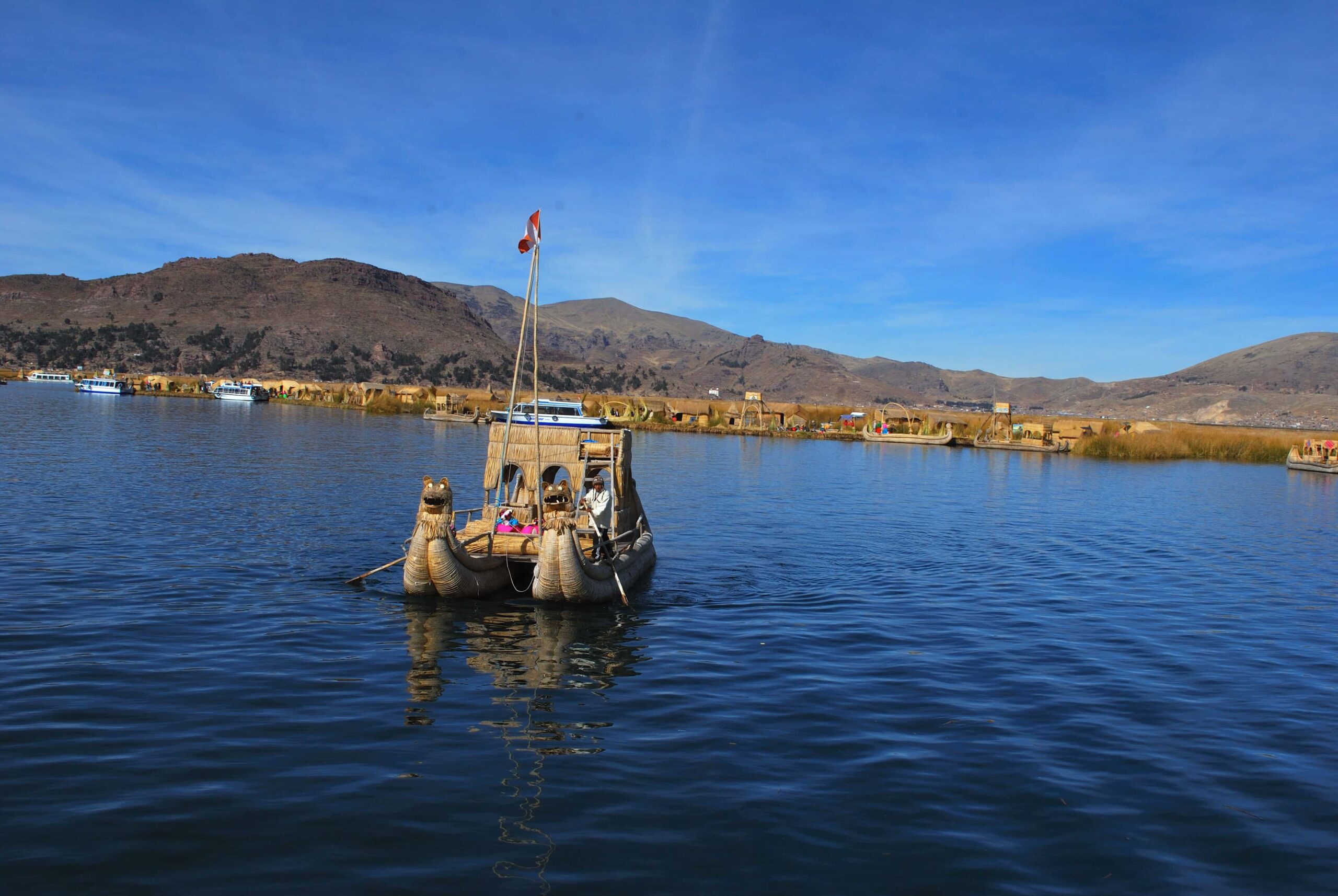
Peruvian Journey
A deep dive through Machu Picchu, Cusco and Lake Titicaca.
Discover Route