
Tiwanaku, Bolivia
One of the great civilizations that came before the Incas — monolithic gates, sunken temples and stones so precisely cut they still puzzle archaeologists.
An empire the Incas inherited.
Tiwanaku is one of the most important archaeological sites in South America and the ceremonial capital of a civilization that shaped the Andean world long before the rise of the Inca Empire. Located in the Bolivian altiplano at nearly 3,850 meters above sea level, this ancient city was the political and religious center of a culture whose influence reached across present-day Bolivia, Peru and Chile.
Declared a UNESCO World Heritage Site, Tiwanaku is defined by its monumental stonework — massive gateways, sunken temples and stone monoliths carved with a precision that continues to fascinate researchers today. Its most famous monument, the Sun Gate, is one of the most iconic pieces of pre-Columbian art in the Americas.
For travelers exploring La Paz and the Bolivian shore of Lake Titicaca, Tiwanaku offers the missing link between the Andean world before and after the Incas.
The city that came before
The Tiwanaku civilization emerged on the southern shores of Lake Titicaca around 1500 BC and reached its peak between roughly 500 and 1000 AD. At its height, Tiwanaku was one of the most influential cultures in South America — its religious symbols, agricultural techniques and iconography spread far beyond its heartland, shaping later Andean societies including the Incas.
The city was a monumental ceremonial center built with precisely cut stone, some blocks weighing dozens of tons, transported from distant quarries. Its architecture reveals a sophisticated understanding of astronomy, hydraulics and stonework that anticipated much of what the Incas would later develop.
Tiwanaku declined around 1000 AD for reasons still debated by researchers, though prolonged drought is one of the leading theories. Centuries later, its stone and its legacy were absorbed into the world the Incas built.
In the Bolivian altiplano
Tiwanaku lies in the Bolivian altiplano, approximately 72 kilometers west of La Paz and about 20 kilometers from the southern shore of Lake Titicaca. Its location on a high, dry plateau at nearly 3,850 meters above sea level — combined with the proximity of the lake — shaped the agricultural and ceremonial life of the civilization that built it. The site can be reached in roughly two hours from La Paz by road.
Two seasons, two experiences
Tiwanaku can be visited year-round, but the experience shifts significantly with the season. At nearly 3,850 meters, sun exposure is intense and temperatures drop sharply after sunset — bring layered clothing, sunscreen and water in any season.
Considered the best time to visit. Clear skies, cold nights and excellent conditions for exploring the ruins and photographing the stonework under direct light.
Rainfall is more frequent and the altiplano turns greener. The site remains open, but afternoon showers are common — plan visits earlier in the day.
What awaits within the site
Monumental gates, sunken temples and precision stonework — the essentials of any visit to Tiwanaku.
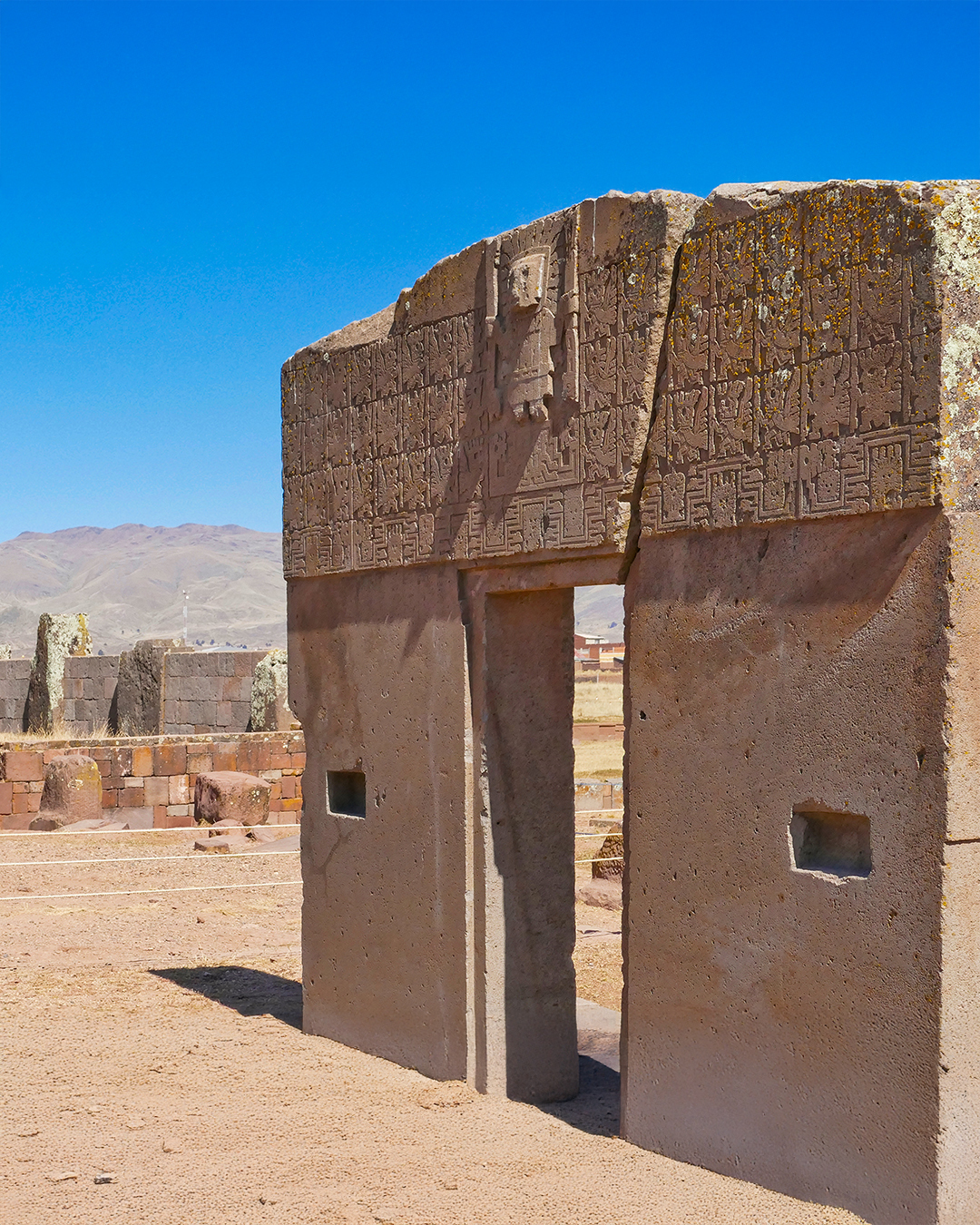
The Gate of the Sun
The Gate of the Sun is the most famous monument of Tiwanaku and one of the most iconic pieces of pre-Columbian art in the Americas. Carved from a single block of andesite, it features a central figure — often identified with a creator deity — surrounded by dozens of intricately carved smaller figures.
Its exact original placement and astronomical function are still debated, adding to its enduring mystery.
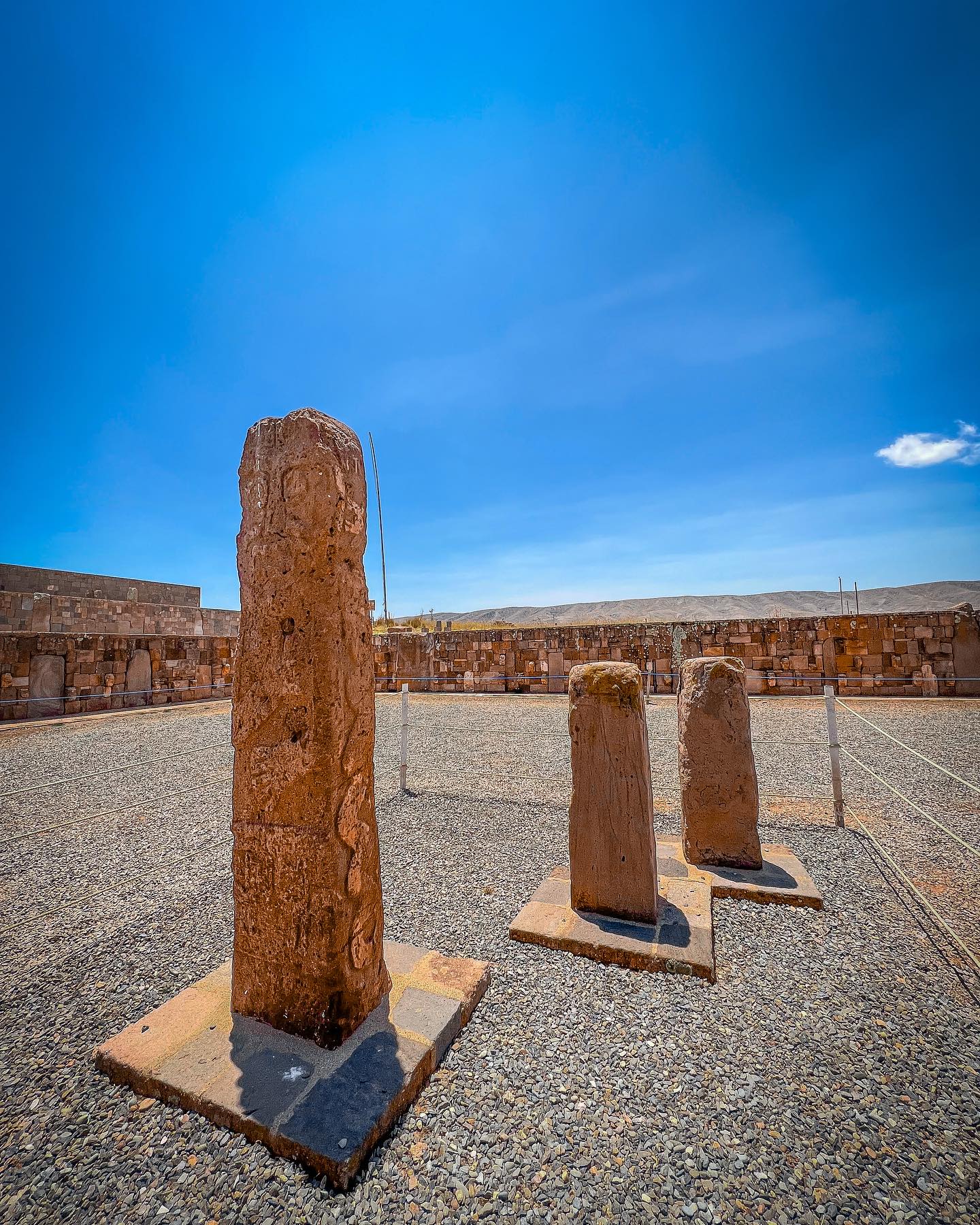
Kalasasaya Temple
Kalasasaya is the largest ceremonial platform at Tiwanaku, bordered by massive upright stone monoliths that give the enclosure its name — meaning "standing stones" in Aymara. The temple is thought to have functioned as a solar observatory, aligned with the equinoxes and solstices.
Inside stands the Ponce Monolith, one of the site's most impressive carved figures.
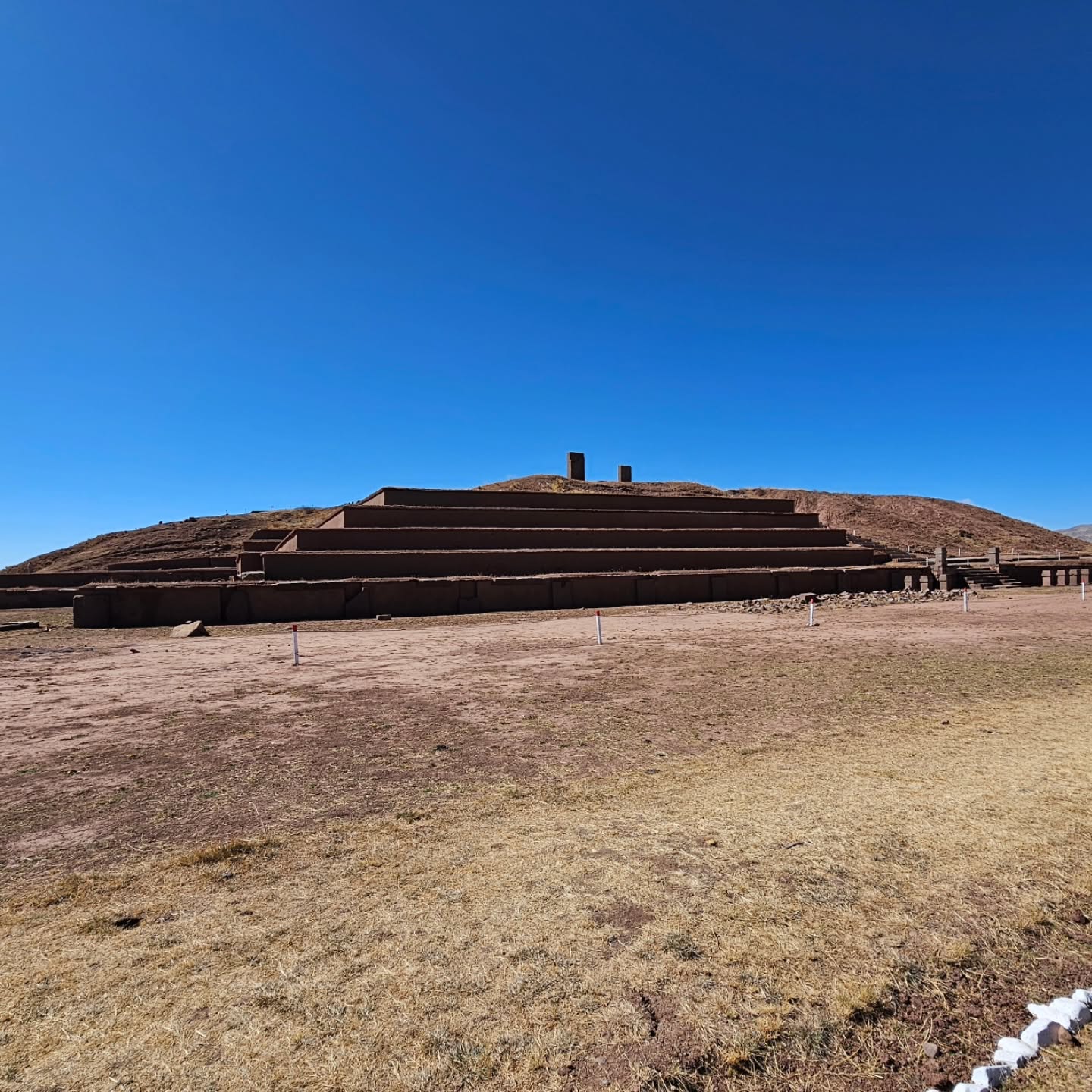
Akapana Pyramid
The Akapana is the largest structure at Tiwanaku — a stepped pyramid built on seven ascending platforms. Once faced with finely cut stone and topped by a complex hydraulic system, it dominated the ceremonial landscape of the ancient city.
Excavations have revealed sophisticated drainage channels that once carried water down through the terraces in a controlled ritual flow.
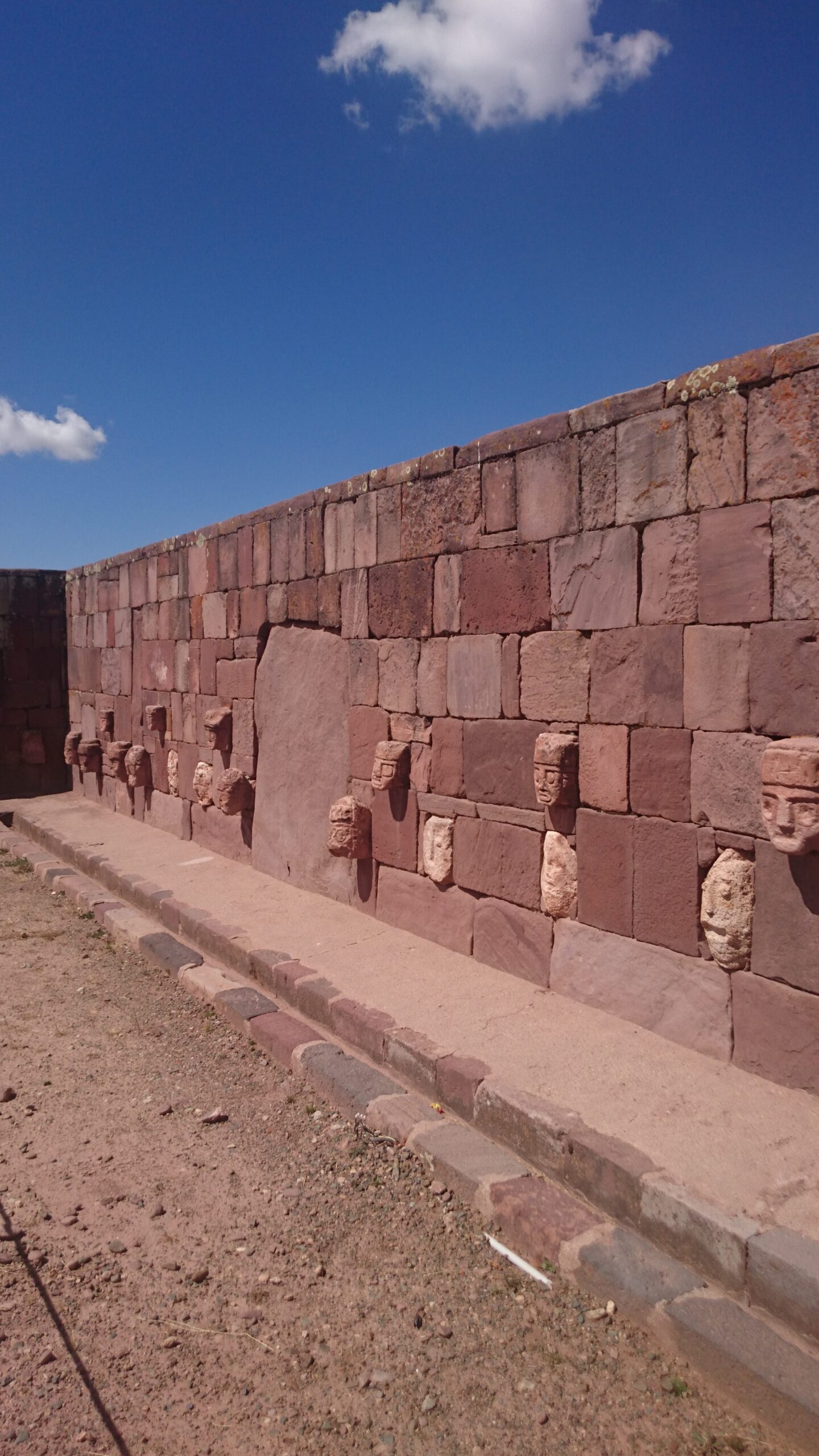
The Subterranean Temple
Set below ground level and accessed by a stone staircase, the Subterranean Temple is one of the most atmospheric structures at Tiwanaku. Its walls are lined with more than 170 stone tenon heads — carved faces of remarkably varied features, believed to represent the many peoples of the Tiwanaku world.
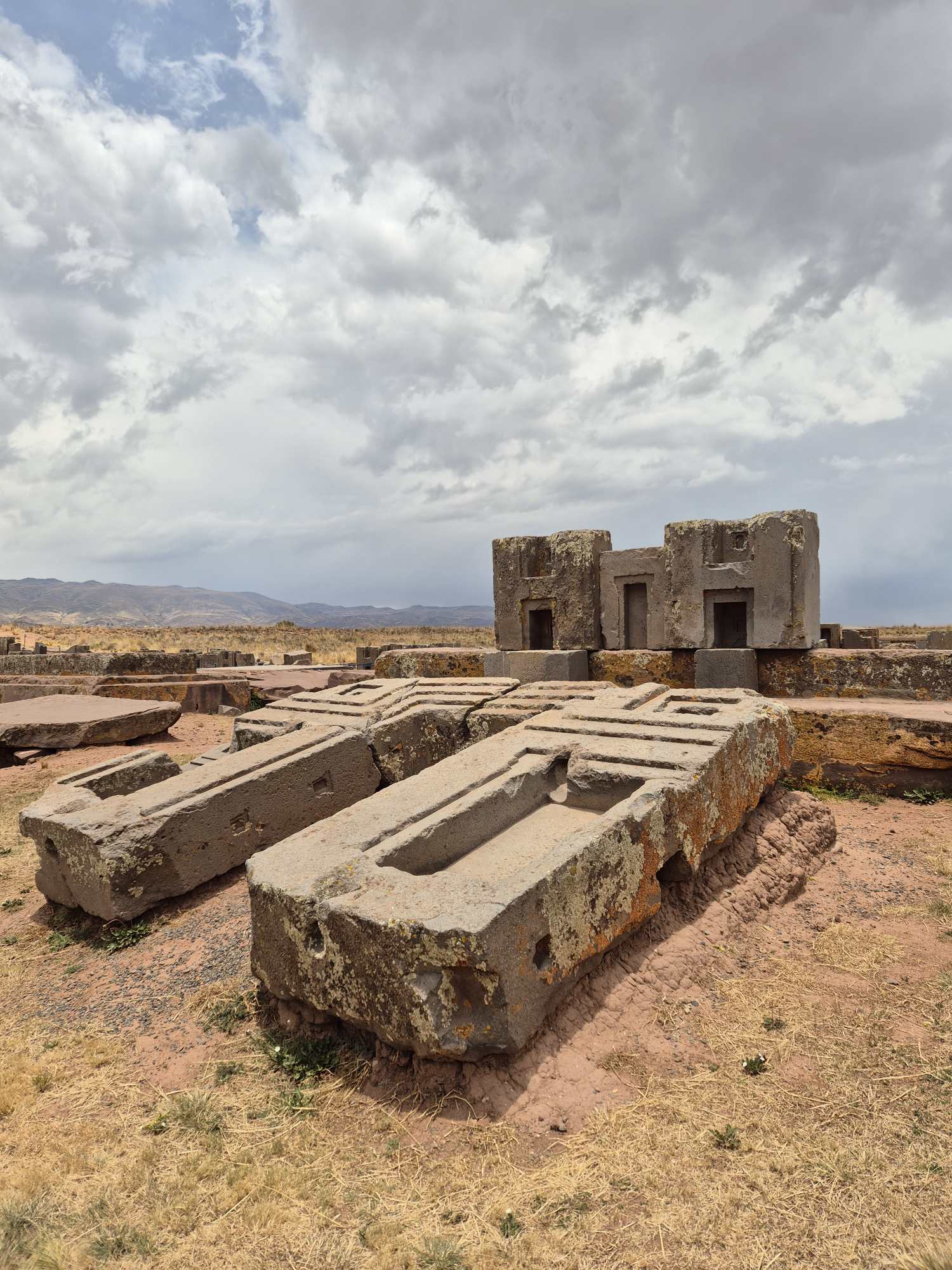
Puma Punku
A short distance from the main complex lies Puma Punku — an area famous for the astonishing precision of its stone blocks, particularly the H-shaped blocks whose interlocking cuts are so exact they still puzzle archaeologists today.
Though much of the structure lies in ruin, the surviving pieces reveal a mastery of stonework that remains one of the great engineering feats of the ancient Americas.
Further essentials
Monoliths and museums that complete a visit to the site.
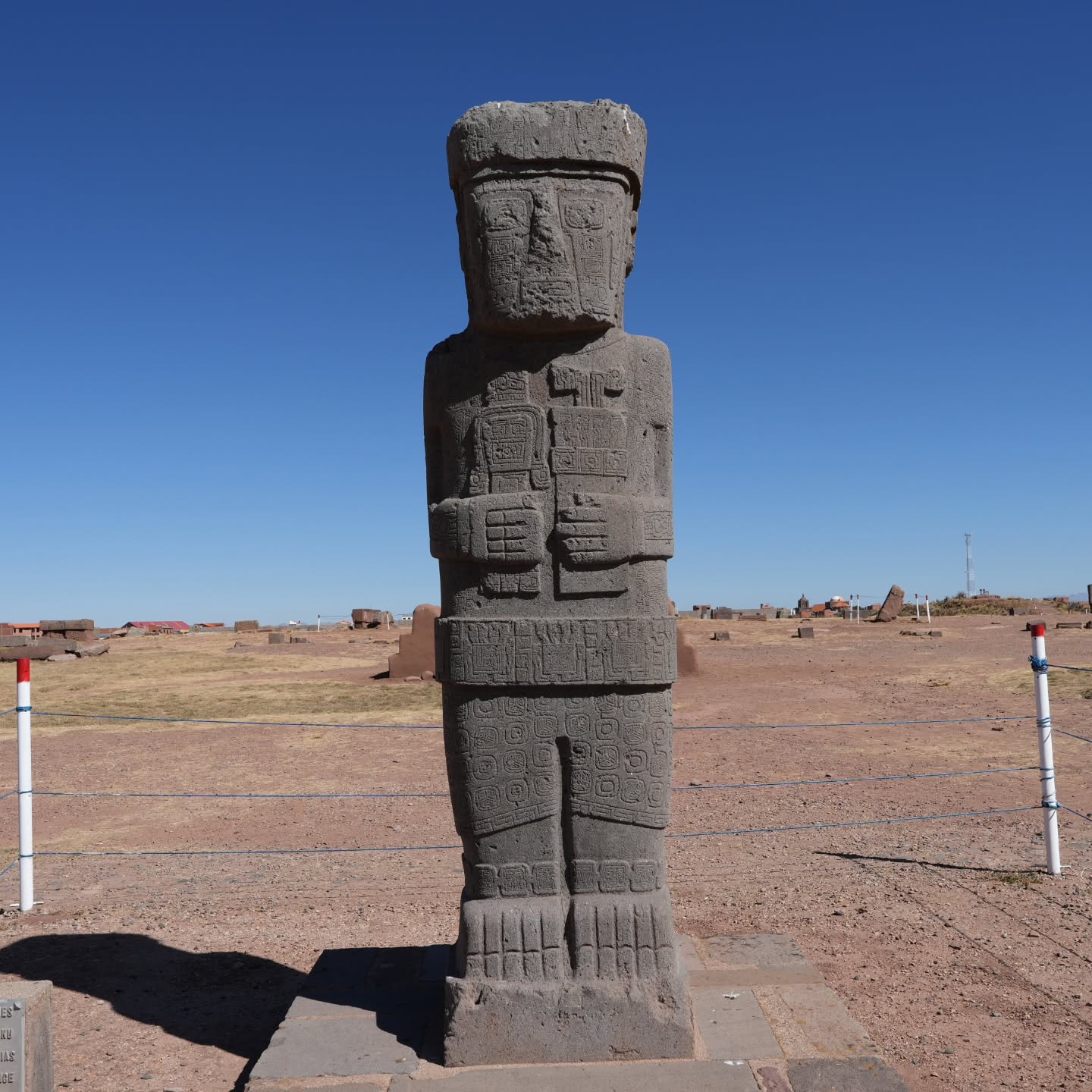
Ponce Monolith
Standing at the center of the Kalasasaya Temple, the Ponce Monolith is one of the most striking carved figures at Tiwanaku. Its incised iconography — staffs, headdress and ceremonial garments — reveals the visual language of the Tiwanaku elite.
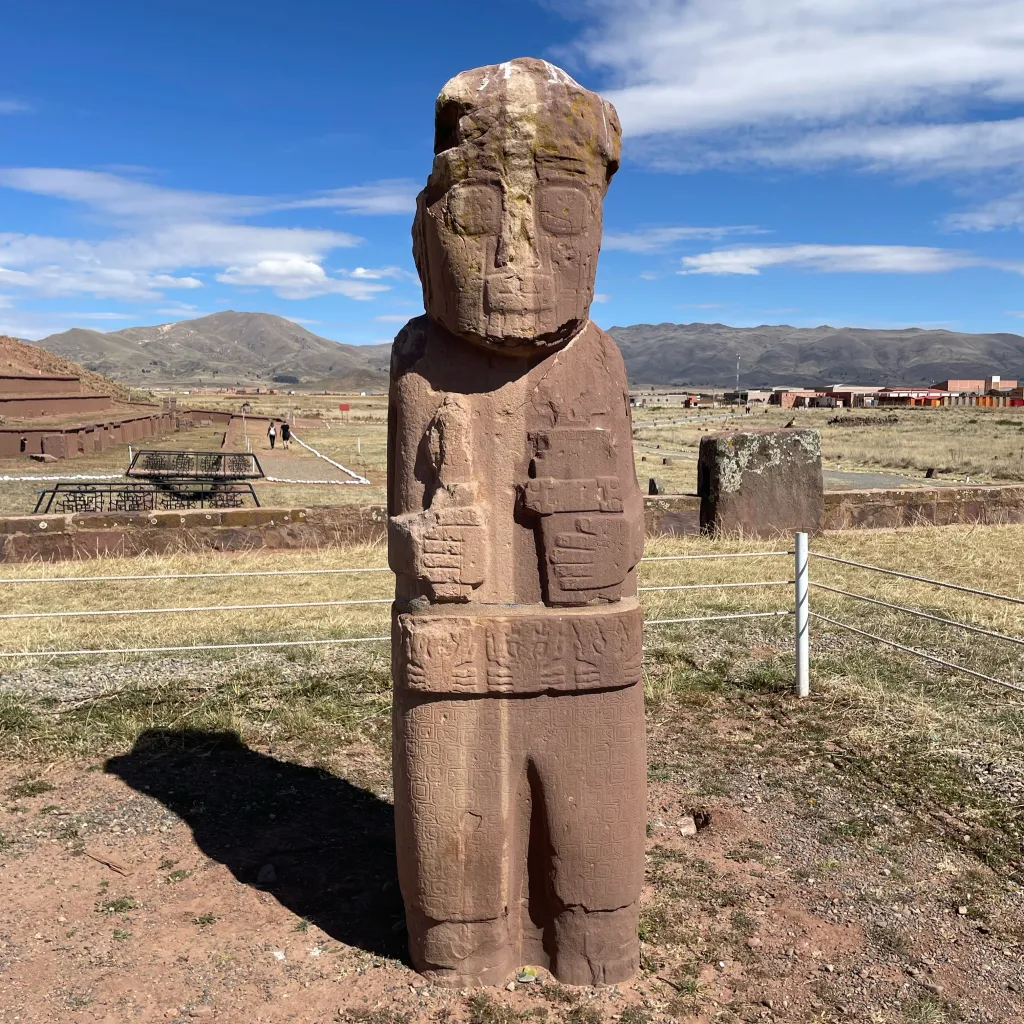
Fraile Monolith
Also known as the Monk, this smaller monolith stands within the Kalasasaya enclosure. Its worn surface still reveals carved details of clothing and ritual objects — a quieter counterpart to the more imposing Ponce.
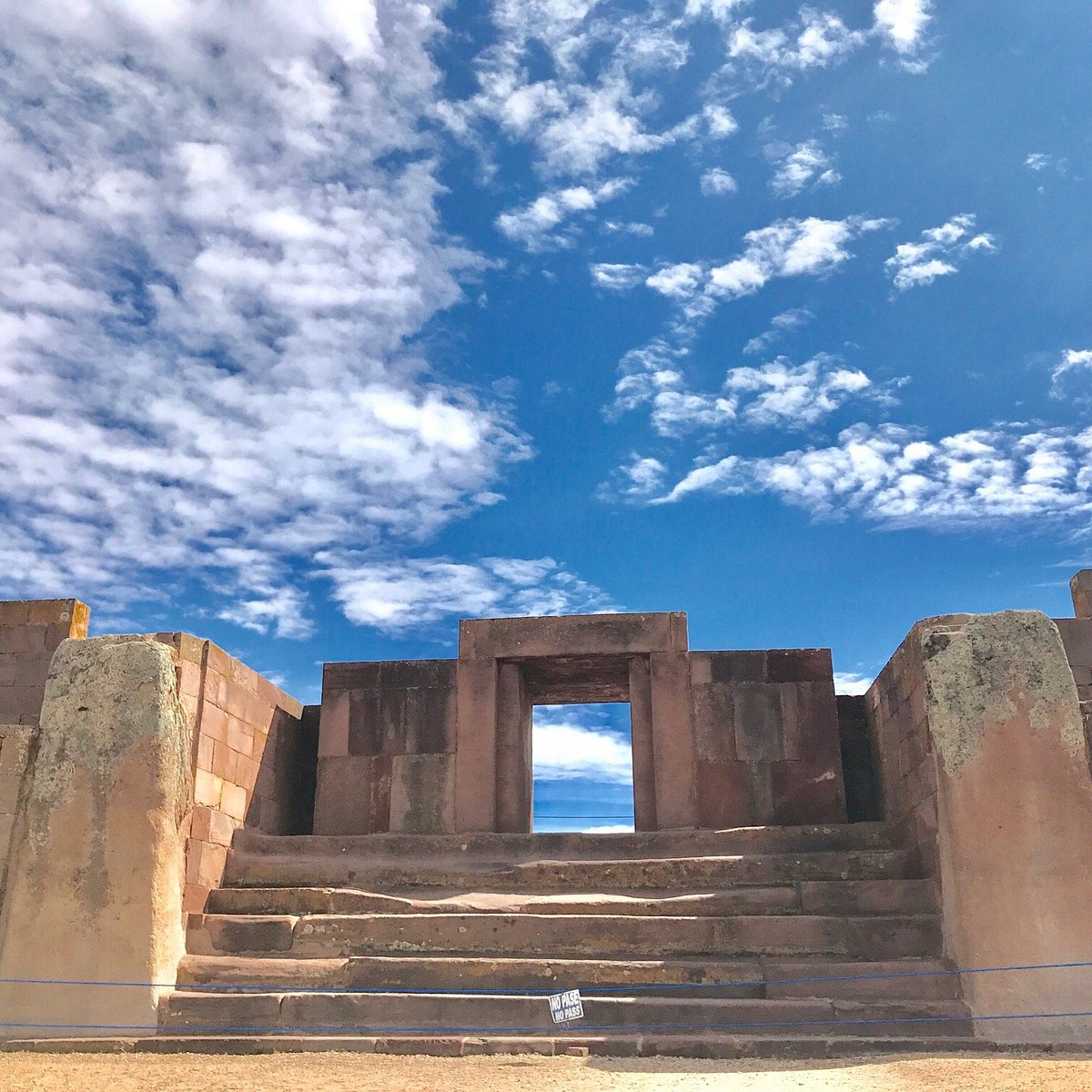
Site Museums
Two on-site museums — the Lithic Museum and the Ceramic Museum — house some of the most valuable artifacts recovered from the excavations, including ceramics, textiles and monoliths brought under cover for their preservation.
La Paz · the gateway
La Paz is the natural base for visiting Tiwanaku. The city lies approximately 72 kilometers east of the archaeological site — a journey of roughly two hours by road across the Bolivian altiplano.
Most travelers visit Tiwanaku as a full-day excursion from La Paz, often combining it with Lake Titicaca or a longer route through the Bolivian highlands. Guided visits are strongly recommended to make sense of the site's layered chronology and its symbolism.
Is Tiwanaku worth visiting?
For anyone drawn to the Inca world, Tiwanaku is essential — because so much of what the Incas built was inherited, refined and reinterpreted from Tiwanaku itself. Visiting the site changes how the rest of the Andean world reads: the Sun Gate, the sunken temples and the precision stonework of Puma Punku all reappear, in echoes, further north.
Combined with a visit to La Paz and the Bolivian shore of Lake Titicaca, Tiwanaku turns a Peruvian journey into a fuller reading of the Andean past — pre-Inca, Inca and colonial, laid out along the same lake and the same high plateau.

Andean Peru
Machu Picchu, Nazca Lines, Colca Canyon, Cusco and the Sacred Valley.
Discover Route
Majestic Peru
Machu Picchu, Huacachina Oasis, Cusco and the waters of Lake Titicaca.
Discover Route
Peruvian Journey
A deep dive through Machu Picchu, Cusco and Lake Titicaca.
Discover Route